Nigeria’s corruption crisis is so pervasive that a strict enforcement of existing laws could land the majority of citizens in prison, the Independent Corrupt Practices and Other Related Offences Commission (ICPC) has warned.
The alarm was raised by the ICPC Resident Anti-Corruption Commissioner for Kaduna State, Sakaba Ishaku, at a capacity-building workshop on local government accountability convened on Wednesday by the State Ministry for Local Government and Chieftaincy Affairs.
Speaking on the theme “Accountability in Local Government: A Springboard for National Development,” Ishaku said corruption has become deeply embedded in every facet of Nigerian life.
He said: “If the laws were to be applied to the latter, about 80 percent of the people you see walking the street freely will be in jail.”
Ishaku described corruption in Nigeria as “endemic and deeply entrenched across all levels of governance and society, driven by weak institutions, lack of accountability and pervasive socio-economic factors.”
He explained that corruption has diverted public resources, worsened poverty, fueled social unrest and stalled development efforts across the country.
He added: “Let me be clear, there is no massive wealth that is acquired that has no criminality behind it. Even if it is by bequest, check its origin — at best you must have underpaid labour.”
The ICPC Commissioner lamented that many Nigerians resist anti-corruption reforms because corrupt practices offer personal benefits. “Not everybody wants to hear about fighting corruption,” he said. “Probably because the pact benefits the dyad to the detriment of the entire society.”
Issuing a direct challenge to local government chairmen, he criticised leaders who complete two terms in office without visible achievements. “It is appalling and quite disheartening for you as Council Chairmen at the point of exit cannot pinpoint any accomplished legacy project,” he said. “Do you really deserve to be there in the first place?”
Ishaku also called for tougher penalties for graft, arguing that current sanctions are insufficient. “Where someone steals 2 billion and he is sent to prison to spend just 5 years is just a slap on the wrist,” he said. He urged a review of Nigeria’s anti-corruption laws to make them stronger and more deterrent.
He encouraged Kaduna State to adopt mandatory project monitoring similar to the ICPC’s Constituency and Executive Project Tracking Initiative, which he said has compelled many contractors who abandoned public projects to return to site.
In his remarks, the Kaduna State Commissioner for Local Government and Chieftaincy Affairs, Sadiq Mamman Legas, aligned with the ICPC’s concerns and added that public attitudes also undermine development efforts.
Legas described Kaduna as a major economic gateway to Northern Nigeria but noted the pressures the region faces. He argued that although Nigeria is “one of the richest countries in the world” by potential, progress has been hampered by poor leadership and weak civic responsibility.
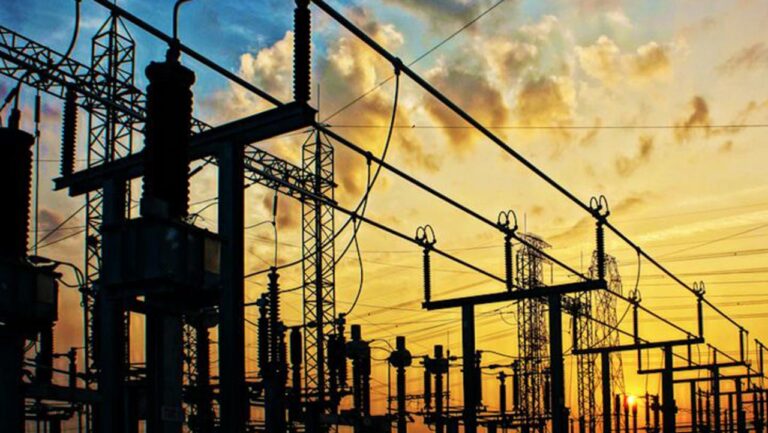
He revealed that his ministry saved “over 8–9 billion” through rural electrification repairs across Zonkwa, Makarfi, Ikara, Kudan and Soba, but lamented that the same communities “stole all and vandalized those transformers.”
According to him, this demonstrates that development cannot succeed when citizens destroy government-provided infrastructure.
He called for wider public enlightenment and stronger collaboration between agencies and local governments to promote community ownership and protection of public assets.
DAILY TRUST.