The installation of a new Olare Aja (oldest man) of the Itsekiri community in Sapele, Delta State, has renewed debate over traditional authority, identity and coexistence in the multi ethnic town, despite efforts to prevent a breakdown of law and order.
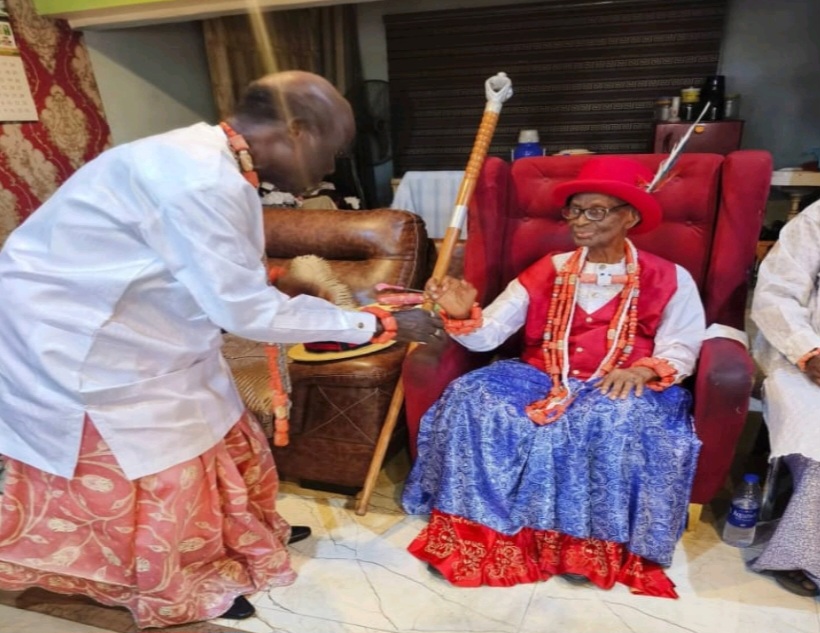
Prince Smart David Gbenebitse, 102, was installed as the 7th Olare-Aja on December 13, 2025, during a private ceremony attended by Itsekiri chiefs, elders and youths. The low key event was held despite earlier indications that the installation would be public.
This was contrary to earlier indications that the event would be publicly conducted. Images that later emerged from the ceremony suggested a restricted gathering, fueling public discussion and concern over the circumstances surrounding the installation.
Sources familiar with the development indicated that the decision to conduct the installation discreetly was taken to avoid possible unrest. This followed sustained opposition from the Okpe Kingdom, the host community of Sapele, which had publicly described the proposed installation as contrary to Okpe and wider Urhobo customs.
Okpe leaders had argued that Sapele, being an Okpe town, already has an Okpako amua, an office regarded as the highest traditional elder position and that local custom does not permit the coexistence of parallel “oldest men” within the same community.
They warned that such an action could be interpreted as a challenge to the traditional authority and territorial integrity of the Okpe Kingdom.
The development came barely a week after the leadership of the Urhobo Progress Union (UPU), the apex socio cultural body of the Urhobo people, urged restraint and caution in Urhobo Itsekiri relations. The UPU leadership emphasized peaceful coexistence and warned against assumptions of ethnic hostility or actions that could inflame tensions.
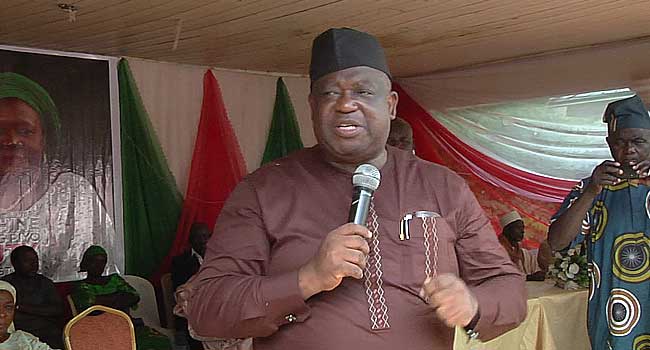
However, reactions following the installation, particularly on social media, suggested rising unease among sections of Urhobo and Okpe youths. Several youth leaders issued public statements warning against actions they described as provocative or dismissive of the host community’s customs, even as they reiterated a commitment to peace.
Sapele occupies a sensitive historical and cultural space in Delta State. Administratively, it forms Sapele Local Government Area, while historically and traditionally it is part of the Okpe Kingdom, under the reign of His Royal Majesty, Major General Felix Mujakperuo (Rtd), Orhue I, CFR, mni, the Orodje of Okpe Kingdom. For the Okpe people, this status represents ancestral ownership and political sovereignty.
At the same time, Sapele is home to a long established Itsekiri population whose cultural identity is tied to the Warri Kingdom under His Majesty, Ògíamẹ̀ Atuwatsé III, CFR, the Olú of Warri. Within the Itsekiri community, the Olare Aja is viewed as a cultural head and custodian of traditions, rather than a territorial ruler or monarch.
This difference in interpretation lies at the heart of the controversy. While the Itsekiri community has maintained that the installation is an internal cultural matter, Okpe stakeholders argue that traditional titles and ceremonies carry symbolic implications that can be perceived as assertions of land or authority, particularly in historically sensitive areas.
Historically, relations between the Okpe and Itsekiri peoples in Sapele have been shaped by coexistence and accommodation.
Following the defeat of Nana Olomu and the fall of Ebrohimi in 1894, Nana’s followers, workers and dependents fled to Sapele and Amukpe as refugees. Led by Ogugbene, Nana’s head slave and father-in-law, they were received and settled by Ofotokun, head of the Urhobos of Sapele, in the Etamua (Strangers’) Quarter. In Amukpe, they were welcomed by Odjegba, father of the Asagba. Over time, intermarriage and integration strengthened communal ties, particularly in Amukpe.
Tensions later emerged in 1928 when Dore Numa, then Paramount Chief of Warri Province, placed Sapele Township under the overlordship of the Olu of Warri and renamed Etamua as Ajamogha. The move was challenged by Chief Ayomanor, head of the Okpe clan, who successfully contested it in court, first at the Warri High Court and later at the West African Court of Appeal in Lagos. The judgment, strongly supported by the UPU, reaffirmed Okpe claims and restored the town’s traditional status.
Observers note that the current dispute is not about whether non indigenous communities may organize internal leadership, as history shows that the Itsekiri community in Sapele once had a recognized head, Chief Amaritsone Ikomi, who coexisted peacefully with Chief Ayomanor. Rather, the concern centers on process, consultation and respect for host traditions.
Community leaders and analysts have suggested that a more inclusive approach, through formal notification and engagement with the Duke of Sapele, the Okpe community and relevant traditional authorities could help prevent misunderstandings and guide cultural practices in a manner consistent with local customs.
As Delta State continues to navigate its complex ethnic landscape, stakeholders are urging restraint, dialogue and mutual respect. Many note that the Okpe and Itsekiri peoples have coexisted peacefully for over a century, and caution that this shared history should not be undermined by unilateral actions or symbolic disputes.
The installation of the Olare Aja, while culturally significant, has once again highlighted deeper questions of identity, land and traditional authority in Sapele.
How these issues are managed in the coming days may prove critical to preserving peace and sustaining coexistence in the historic town.