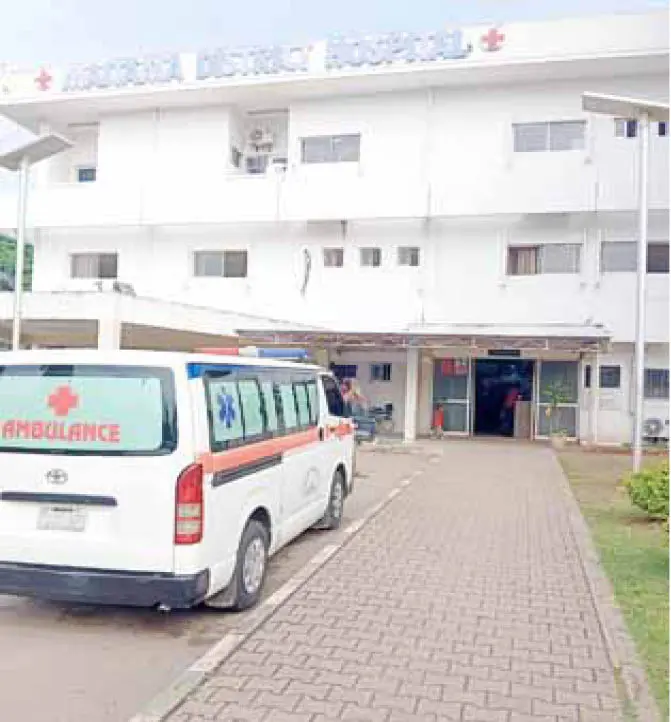
More than two months after the Joint Health Sector Unions (JOHESU) embarked on a nationwide strike, patients across Nigeria are bearing the brunt of the prolonged industrial action, with many forced to abandon public hospitals, delay critical treatments and seek costly alternatives in private facilities.
The strike, which entered its 84th day on Friday, has paralysed activities in government-owned hospitals across the country, leaving patients stranded and compelling many to seek essential medical services outside public health institutions.
JOHESU, which represents health professionals in pharmacies, laboratories and other support departments, has maintained that the action will continue until the Federal Government implements the report of the Technical Committee on the adjustment of the Consolidated Health Salary Structure (CONHESS), submitted since 2021.
The protracted strike has also triggered a 14-day ultimatum issued by the Nigeria Labour Congress (NLC) and the Trade Union Congress (TUC) in solidarity with the health workers. The ultimatum, which expires on Friday, February 6, 2026, warned that other affiliate unions could join the action if the government fails to resolve what labour described as the “maltreatment” of health workers.
JOHESU insists on CONHESS adjustment
Speaking with Daily Trust on Wednesday evening, JOHESU National President, Kabiru Minjibir, reaffirmed that the ongoing nationwide strike would continue until the Federal Government adjusts CONHESS.
“Our demand is singular and clear: the adjustment of the CONHESS salary structure,” Minjibir said.
He explained that Nigeria operates two salary structures in the health sector — the Consolidated Medical Salary Structure (CONMESS) for doctors and CONHESS for other health professionals such as medical laboratory scientists, pharmacists, environmental health officers and community health workers.
Minjibir recalled that under the 2009 Collective Bargaining Agreement (CBA), it was agreed that if one salary structure was reviewed, the other should automatically be adjusted to maintain salary relativity.
“The agreement contained a clear clause that if one salary structure is reviewed upward, the other should also be reviewed to maintain relativity,” he said.
However, he noted that while CONMESS was reviewed in 2014, 2017 and 2018, CONHESS has remained unchanged for about 12 years.
“Since the first review in 2014, other health workers under JOHESU have consistently agitated for a corresponding adjustment of CONHESS, but unfortunately, it has not been reviewed to date,” Minjibir stated.
According to him, several Memoranda of Understanding (MOUs) signed with the government over the years have also failed to yield results.
“There have been about eight MOUs, none of which have been implemented,” he said.
Minjibir further disclosed that JOHESU rejected a recent proposal by the Federal Ministry of Health to review allowances instead of salaries, insisting that CONHESS must first be adjusted.
“Proceeding with allowance reviews while CONHESS remains unadjusted will further disadvantage our members and push them several steps backward,” he said.
He added that despite threats of “no work, no pay” and the introduction of attendance registers, health workers remain resolute.
“Our members have mandated us to continue the strike until our demands are met,” Minjibir said.
Situation across states
At the Kubwa General Hospital in Abuja, a nurse on duty lamented that the absence of some health workers due to the ongoing strike had made work monotonous and difficult, noting that effective hospital service depends on teamwork.
The nurse explained that patients are now forced to seek basic services outside the hospital premises.
“Whatever a doctor prescribes for a patient — including tests, scans, drugs or X-rays — the patient has to go outside the hospital to get the service,” he said.
He added that patients often have to visit multiple locations to access these services.
“In most cases, you can hardly get all these services in one place, even outside. This has really made our work difficult,” he added.
The nurse also said the number of patients visiting the hospital had dropped significantly, as many residents still believed that all hospital workers, including nurses and doctors, were part of the strike.
“Some people still think the strike involves everyone in the hospital, but in reality, nurses and doctors are not participating,” he noted.
Our reporter observed that there were no patients on admission in both the emergency unit and the male ward of the hospital. While the emergency unit remained empty, the male ward was found locked.
It was gathered that patients from both units had been relocated and merged with other wards, as the hospital currently operates at a skeletal level due to the ongoing strike.
Benue
Patients in Benue State have expressed concern over the prolonged strike by JOHESU, which has continued to deny them access to medical care in government-owned hospitals.
Our correspondent reports that the Benue State University Teaching Hospital (BSUTH), once a beehive of activity, now records a drastic drop in patient turnout due to the strike.
A patient, Cletus Terkimbi, told our correspondent that he has been awaiting surgery since December but has been unable to proceed.
“To say I am disappointed is an understatement. I was scheduled for surgery in December, but I have been unable to access any medical attention because of the strike. This is a very sad situation, especially for the less privileged,” he said.
Another patient, Memuna Audi, said she was turned back from the radiography department when she went for X-ray services.
“The situation is worrisome. I hope the strike will be called off soon because I cannot afford private medical services elsewhere. Right now, I am stranded,” she said.
Some hospital staff, who preferred anonymity, said activities at the hospital had largely ground to a halt.
“The hospital has not been admitting patients for a while now. Only consultants are working, and they are even threatening to embark on a strike as well,” one of them said.
Kano
Although the strike by the Medical and Health Workers Union of Nigeria and the Association of Medical Laboratory Scientists under JOHESU has not completely crippled activities in public hospitals in Kano, it is taking a heavy toll on patients, many of whom now pay higher costs for basic services.
A visit by our correspondent to the Aminu Kano Teaching Hospital (AKTH) revealed that while doctors were attending to patients, only the emergency unit was operating, alongside limited services such as card administration, the cash office and the pharmacy.
At the Muhammadu Sanusi Diagnostic Centre within the hospital, many patients were seen around the premises, but the main entrance was closed. At the digital radiography unit, a security guard said only emergency requests were being handled.
A patient at the Accident and Emergency unit, who did not want his name published, expressed frustration.
“Only in Nigeria can an industrial action by medical personnel last for almost three months without a solution. We are lucky the emergency unit is still operating; otherwise, where would one go in a medical emergency?” he said.
Another patient at the General Outpatient Department, Mamman, said he could not obtain a hospital card.
“I was told doctors were attending to patients, so I came. But the person issuing cards was not available. They said he had closed for the day, even though it was just after 10am. I was advised to come back tomorrow,” he said.
A resident, Murtala Inusa, said he had taken his sick mother to a private hospital.
“Only the emergency unit is functioning, but my mother needed admission, so I took her to MGK Hospital close to AKTH. It is a sad commentary on our health system,” he said.
Bauchi
The strike by JOHESU has compelled patients and relatives to patronise private medical laboratories in Bauchi State.
Some relatives of patients have lamented exorbitant charges and the cost of transporting patients on admission in government hospitals to private laboratories.
A patient at the medical emergency unit of the Abubakar Tafawa Balewa University Teaching Hospital (ATBU-TH), Haruna Abdulmumin, who is battling hypertension, stomach ulcer and kidney infection, said he spent heavily on medical tests.
“Just today (Wednesday), I spent over N120,000 on tests at a private laboratory. I also spent another N10,000 on a commercial tricycle transporting me and my brother to different laboratories for various diagnoses prescribed by a doctor,” he said.
Abdulmumin explained that without the strike, the cost of tests would have been significantly lower.
“If there was no JOHESU strike, the cost of tests would not be up to that amount. I wouldn’t have been subjected to this kind of untold hardship, moving from one laboratory to another despite going through severe pain,” he said.
A relative of a patient at the male medical ward of ATBU-TH, Alhaji Suleiman Abubakar, said the strike had severely affected his brother’s condition.
“My brother’s medical condition is critical, but the most annoying part is not even the money spent on tests; it is the movement from the hospital bed to private laboratories. He goes through a lot of pain during these movements,” Abubakar said.
A mother of a patient at the paediatric ward of ATBU-TH, Sadiya Adamu, said taking her child to private laboratories despite being on admission was distressing.
“Apart from spending extra money on tests at private laboratories, the logistics are exhausting. My child is battling a leg ulcer, and I don’t have the strength to carry him from one place to another. This is only increasing our suffering,” she said.
When our correspondent visited some private laboratories in the metropolis, he observed a high turnout of patients and their relatives.
Efforts to get an official response from the Federal Ministry of Health and Social Welfare were unsuccessful.
DAILY TRUST.