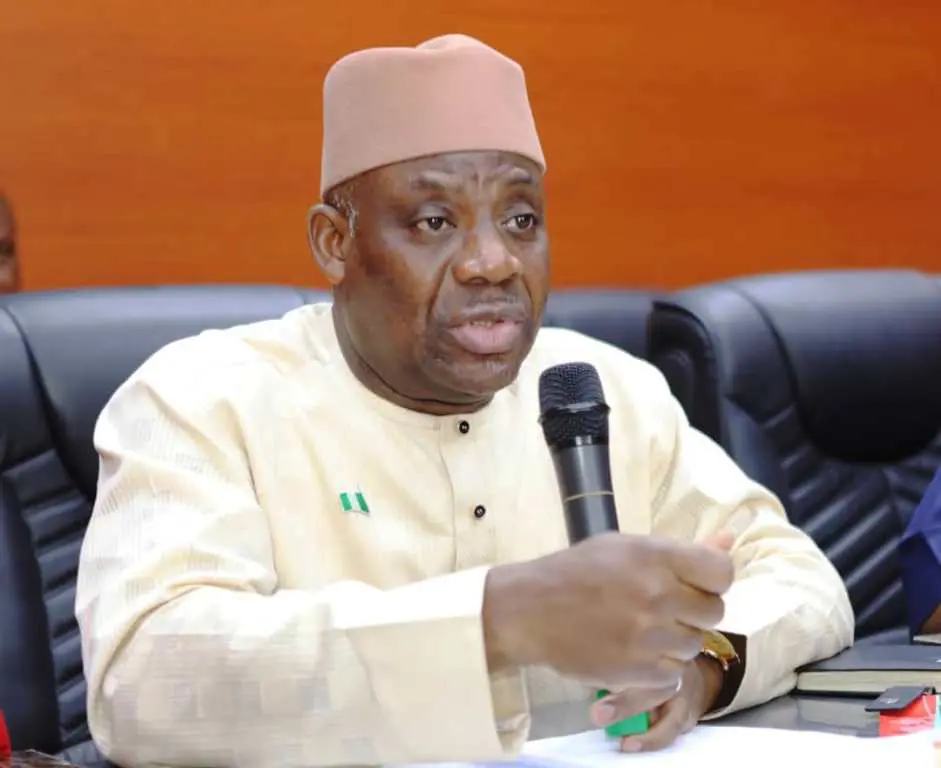
The federal government has placed a six-year moratorium on the establishment of tertiary institutions across the country.
Addressing State House correspondents after Wednesday’s Federal Executive Council (FEC) meeting, Minister of Education, Olatunji Alausa, said the decision was aimed at improving the quality of education nationwide.
Explaining the development, the minister recalled that a moratorium had earlier been placed on the establishment of private universities last year.
He added that the new directive now covers all tertiary institutions, including universities, polytechnics and colleges of education.
He said Nigeria is no longer primarily concerned about access to tertiary education but about improving quality.
“The memo approved by council today is the placement of a six-year moratorium on the establishment of new tertiary institutions—universities, polytechnics and colleges of education.
“Access is no longer the major issue in the country. We have many tertiary institutions, both public and private. We need to help private institutions remain financially sustainable,” he said.
He said about 2.3 million Nigerians applied to sit for JAMB examinations last year, yet nearly 228 universities recorded fewer than 50 applicants each.
He noted that with the resolution of issues involving the Academic Staff Union of Universities (ASUU), more students are likely to enrol in public universities, which could further reduce patronage of private institutions.
He stressed the need to protect investments made by private proprietors while improving quality in both public and private institutions.
The minister also disclosed that the FEC approved the restoration of the National Commission for Mass Literacy, Adult and Non-Formal Education, which had earlier been downgraded to a department within the ministry.
He explained that the move aligns with President Bola Ahmed Tinubu’s agenda to make over 50 million Nigerians digitally literate within the next two to three years.
Alausa noted that with about 56 million Nigerians still illiterate, reverting the commission to its former status would strengthen efforts to promote adult and non-formal education, particularly in rural communities through radio, television, advocacy and dedicated learning centres.