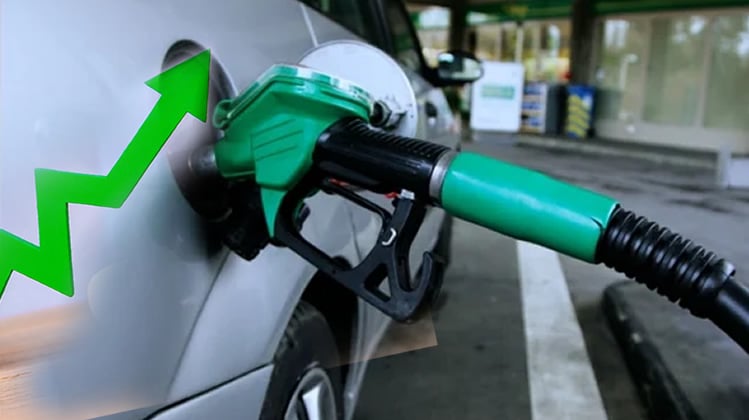
Nigeria’s dependence on imported petrol persisted in 2025, with oil marketers spending N8.96tn on Premium Motor Spirit (petrol) imports between January and December, despite increased investments in domestic refining capacity.
An analysis of the latest foreign trade data released by the National Bureau of Statistics on Thursday showed that petrol, code-named “Motor spirit ordinary,” remained one of the most imported commodities throughout the year, reflecting ongoing supply gaps in the downstream sector.
The NBS said petrol import costs were N8.96tn in 2025, but represented a decline of N6.46tn or about 41.9 per cent from the N15.42tn recorded in 2024, but still stood N1.45tn or roughly 19.3 per cent higher than the N7.51tn posted in 2023 when fuel subsidy was eliminated by the current administration.
This latest development comes days after The PUNCH exclusively reported that Domestic refineries imported crude oil worth N5.734tn between January and December 2025, exposing a deepening supply paradox in the country’s oil sector and an obsession for imports.
The fuel import expenditure came at a time when expectations were high for a decline in reliance on foreign supply following significant investments in local refining.
This trend persisted despite the commencement of operations, steady ramp-up in production and distribution of petrol by domestic refineries, notably the Dangote Petroleum Refinery, alongside state-owned refineries and several modular facilities.
Data from the Nigerian Midstream and Downstream Petroleum Regulatory Authority published recently revealed that total petrol consumption stood at 18.97 billion litres in 2025, with 11.85 billion litres, representing 62.47 per cent, supplied through imports.
While domestic refineries contributed about 7.54 billion litres, accounting for 37.53 per cent of total consumption.
But in the new NBS document, which focuses on the value of products, the data showed a fluctuating but sustained petrol import pattern, with expenditure rising by N0.62tn, or about 35.2 per cent, from N1.76tn in the first quarter to N2.38tn in the second quarter, before dropping sharply by N1.09tn, or roughly 45.8 per cent, to N1.29tn in the third quarter.
However, imports rebounded strongly in the fourth quarter, surging by N2.25tn, or about 174.4 per cent, to N3.54tn, the highest quarterly expenditure recorded in the year.
Overall, the fourth-quarter spike accounted for nearly 40 per cent of total annual imports, underscoring persistent supply pressures and seasonal demand fluctuations. The statistics agency didn’t provide a breakdown of the value imported monthly.
Breakdown of the figures showed that petrol was the second most imported product in the first quarter at N1.76tn, and also ranked as the second highest import from African countries, with N89.18bn largely sourced from Togo within the ECOWAS sub-region.
By the second quarter, petrol had risen to become Nigeria’s top imported product at N2.38tn, maintaining its dominance across African, West African, and ECOWAS trade corridors, where imports stood at N208.76bn.
However, the trend shifted in the third quarter, when import value dropped to N1.29tn, making petrol the third most imported product globally during the period. Notably, no imports were recorded from African or ECOWAS countries in that quarter, indicating a shift towards alternative international suppliers.
In the fourth quarter, petrol imports rebounded strongly to N3.54tn, reclaiming its position as the most imported commodity. Within Africa, it ranked as the second-highest import at N84.69bn, with Togo again featuring prominently among regional suppliers.
In the fourth quarter, petrol imports from Brazil were valued at N221.15bn, while the Netherlands emerged as one of Nigeria’s largest suppliers with shipments worth N1.22tn in the same period.
Overall, the product’s share of total trade reflected a fluctuating but rising trend, accounting for 11.42 per cent in the first quarter, increasing to 15.54 per cent in the second quarter, before dropping to 7.98 per cent in the third quarter and rebounding sharply to 20.52 per cent in the fourth quarter.
Further analysis showed that Nigeria sourced petrol from a diverse mix of countries, including the Netherlands, the United States, Belgium, Brazil, and Togo, highlighting the global nature of its fuel supply chain.
Despite the operational take-off of the Dangote Refinery and ongoing rehabilitation of state-owned refineries, import dependence remains deeply entrenched.
Over the past five years, Nigeria’s petrol import bill has steadily risen. In 2020, the country spent N2.01tn on fuel imports, more than doubling to N4.56tn in 2021.
By 2022, the figure further increased to N7.71tn before slightly declining to N7.51tn in 2023. However, in 2024, fuel import expenditure surged to an all-time high of N15.42tn, marking the largest petrol import bill in Nigeria’s history.
The figures highlight a structural imbalance between refining capacity and actual output, noting that while installed capacity has improved, feedstock constraints, logistics challenges, and market dynamics continue to limit performance.
Energy analysts warn that the continued reliance on imports, despite increased refining capacity, raises concerns about energy security, foreign exchange pressure, and the sustainability of the downstream market.
Commenting, the Managing Partner at Energy Consulting Practice, Kelvin Emmanuel, accused the Presidency of maintaining tight control over licensing decisions in Nigeria’s oil and gas sector, in what he described as a violation of the provisions of the Petroleum Industry Act.
Speaking in a telephone interview on Thursday, Emmanuel said, “The State House has refused to hand off its control in dictating to the authority who gets a licence or not, and has ignored calls consistently to comply with Sections 317, and 7 to 11 of the PIA.”
He further raised concerns over crude supply challenges facing the Dangote Refinery, noting that the facility was still heavily reliant on imports despite its scale.
“Dangote is currently importing about 10 million barrels out of the 18 million barrels he processes monthly. The one fortunate part of this crisis is that Lagos sits on the Atlantic Basin, so he can easily ship in crude from Houston or Brazil,” he said.
Emmanuel criticised the Federal Government’s much-publicised naira-for-crude initiative, arguing that structural issues within the oil market were undermining its effectiveness.
“The government keeps touting the naira-for-crude initiative, when in reality it’s either the NNPC is not giving him crude because most of it is locked in forwards that have been pre-sold, or commercial operators are routing their feedstock at extra commissions outside the fiscal oil price,” he stated.
He added that Nigeria must take deliberate steps to safeguard domestic refining by establishing a national buffer stock. “The Nigerian Government needs to develop a strategic petroleum reserve that is codified through an Act of Parliament, to serve domestic refiners,” Emmanuel said.
The sustained reliance on foreign petrol supply underscores the challenges facing Nigeria’s energy transition, as the country grapples with aligning its upstream resources with downstream capacity.
As Africa’s largest oil producer, the paradox of importing a majority of its refined fuel needs continues to define Nigeria’s petroleum sector, a trend that policymakers say must be urgently reversed to achieve true energy independence.
PUNCH.