Screenshot
The Delta State Government has approved the employment of over 700 medical and non-medical personnel as part of a sweeping effort to strengthen healthcare delivery across the State.
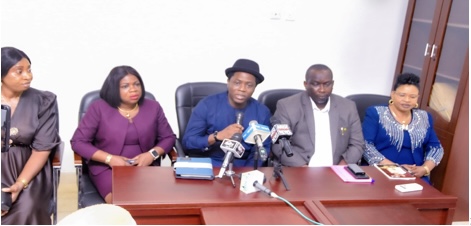
The Honourable Commissioner for Health, Dr. Joseph Onojaeme, disclosed this during a press briefing, describing the development as a strategic response to ongoing expansion in the health sector under the administration of Governor Sheriff Oborevwori.
According to Onojaeme, the approval reflects the government’s deliberate investment in healthcare infrastructure and human capital.
“This approval is a direct reflection of the administration’s deliberate and strategic efforts to expand and strengthen healthcare delivery across the State,” he said.
He noted that several major projects, including the upgrade of General Hospital Warri to a Central Hospital and the near-completion of the Mother and Child Hospital in Ekpan, have significantly increased the demand for qualified personnel.
Providing a breakdown of the recruitment, the Commissioner revealed that the Hospital Management Board would absorb 295 staff, while the Delta State University Teaching Hospital has been allocated 120 personnel.
He further disclosed that the newly established College of Health Technology, Ovrode will recruit 100 staff to support the training of middle-level healthcare professionals, while other institutions such as Asaba Specialist Hospital and Warri Central Hospital will receive 60 and 12 personnel respectively.
Onojaeme emphasized that the recruitment exercise was also aimed at addressing the impact of the ongoing migration of healthcare professionals, popularly referred to as “Japa syndrome.”
“The health sector continues to experience the effects of the migration of skilled professionals, which is a global challenge. However, with the standing order approved by His Excellency to replace personnel who have left the service, we have been able to maintain a stable workforce,” he stated.
The Commissioner also highlighted critical gaps being addressed by the government, particularly the establishment of a State Public Health Laboratory.
He recalled that during the COVID-19 pandemic, samples had to be sent to the Nigeria Centre for Disease Control in Abuja due to the absence of such a facility.
“The State Public Health Laboratory is now near completion, and the process of equipping it is ongoing. This will require skilled personnel to operate effectively,” he added.
In addition, he disclosed that a new psychiatric hospital was under construction, further underscoring the need for expanded human resources in the sector.
Highlighting the State Government’s investment in modern medical technology, Dr. Onojaeme revealed that advanced high-end equipment has been procured to enhance diagnostic and treatment capacity.
“The State Government has procured three 1.5 Tesla MRI machines. Unlike the older models that depend on helium—which is extremely expensive to refill—these are helium-free systems, making them more cost-effective and easier to maintain,” he explained.
He further noted that the government has also invested in dialysis infrastructure, significantly reducing the cost of treatment for patients across the State.
“We have also procured dialysis machines, which have brought down the cost of dialysis significantly. In some of our facilities, costs have reduced to as low as ₦45,000, and with additional interventions such as vascular access surgeries, it can drop even further,” he said.
Reiterating the government’s commitment to transparency and excellence, Onojaeme stressed that the recruitment process would be strictly merit-based.
“The Ministry is finalizing arrangements to advertise these positions in both national and local dailies. We want the best hands in the system to ensure quality and accessible healthcare for our people,” he said.
He listed the categories of personnel to be employed to include medical consultants, doctors, nurses, pharmacists, laboratory scientists, physiotherapists, health technologists, administrators, and support staff.
The Commissioner assured that the initiative would not only strengthen the State’s healthcare system but also improve service delivery and outcomes for residents.
“Our goal is to attract the best professionals to further strengthen healthcare delivery and ensure that the people of Delta State receive quality and accessible medical services,” he concluded.