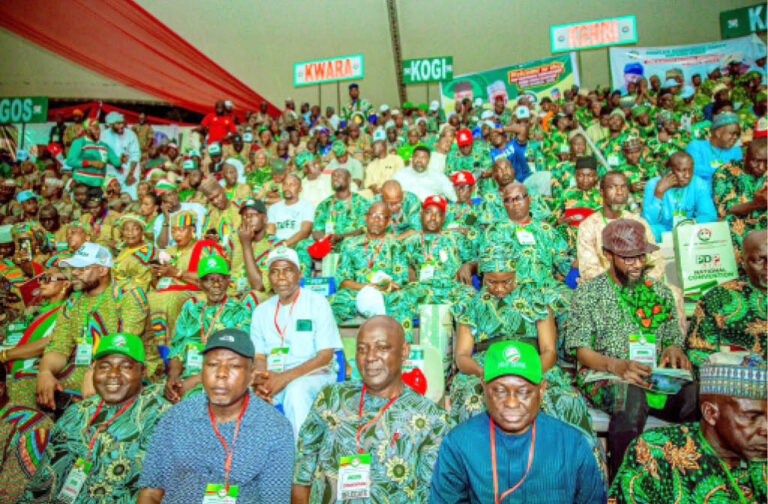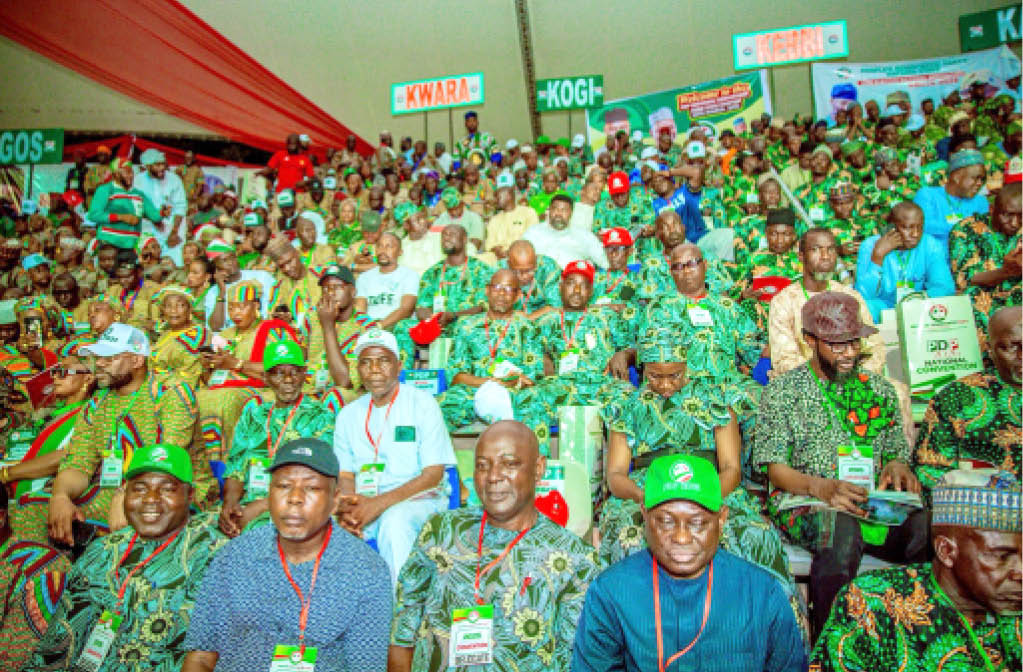
The last national convention of the Peoples Democratic Party (PDP) organised by the faction backed by the Minister of the Federal Capital Territory, Nyesom Wike, may have effectively pushed the party further away from reconciliation.
From all indications, it has entrenched a fresh leadership crisis that now appears headed for prolonged legal and political confrontation.
What had, until recently, been a struggle for control between two blocs within the party has now crystallised into a test of legitimacy, both in the courts and within the party’s power structure.
On one side is the faction led by a former Minister of Special Duties, Kabiru Tanimu Turaki, backed by PDP governors and produced through the Ibadan convention of November last year.
On the other side is the Wike-aligned bloc which rejected that process, set up a 13-member National Caretaker Working Committee and has now conducted its own convention, producing a parallel National Working Committee (NWC) led by Abdulrahman Mohammed.
The implication is that the PDP is operating with competing leadership claims, each asserting institutional authority.
Apart from the issue of two parallel national conventions and two persons claiming national chairmanship of the party, the PDP currently has only two governors, Seyi Makinde of Oyo and Bala Mohammed of Bauchi.
Recent reports indicate that even that humble number may be further depleted with the ongoing discussions with the Bauchi governor to either shift to the All Progressives Congress (APC) or the African Democratic Congress (ADC).
Efforts to halt the Wike-backed convention, including a last-minute approach to the Supreme Court by the Turaki camp, failed. More significantly, the convention went ahead despite ongoing reconciliation talks, suggesting a breakdown of trust and a shift toward a winner-takes-all approach.
In its immediate reaction, the Turaki-led faction dismissed the exercise as a “pre-Easter jamboree of APC sympathisers and members of Wike’s Autocratic Party,” underscoring the depth of animosity between both camps.
The spokesman of the faction, Ini Ememobong, signalled a strategic pivot to the judiciary. He said genuine members of the PDP across the country had expressed their concern about the situation.
“To them, and other fair-minded, democracy-loving Nigerians, we reassure that we have taken this battle to the Supreme Court for the determination of all the issues relating to the leadership of our party, particularly as it relates to what constitutes an internal affair.
“With this appeal and the relevant concomitant applications filed and served on all the parties involved, we are hopeful that sooner, rather than later, the apex court will, in the interest of democracy, expeditiously hear and adjudicate on this matter.”
He further argued that the convention was held in contempt of the Court of Appeal, pointing to unresolved legal processes that, in his view, should have restrained further actions.
Yet, from the Wike camp, the tone is markedly different—less defensive, more declarative.
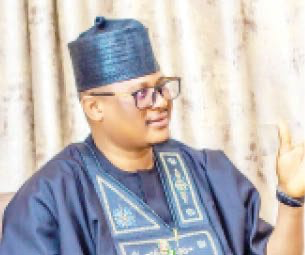
The spokesman of the faction, Jungudo Haruna Mohammed, framed reconciliation as conditional, not mutual.
According to him, “Reconciliation in this particular case is an ongoing thing, and we are open, provided the aggrieved parties are willing to abide, by the constitution of the party. They are willing to agree with what has been done so far. We cannot reverse the hands of the clock. So we are open, as a political party, we want to have people coming into our fold.
“Reconciliation, with or without these circumstances, is part and parcel of the day-to-day activities of a political party.”
On the legal battle, Mohammed said, “for us, we are not perturbed by the processes they have filed, which we are yet to be served. We will wait to see how that will end as well. But we are quite optimistic that nothing will change.”
This posture suggests that the Wike-aligned leadership sees the battle as largely settled politically, with the courts serving only as a secondary arena.
From reconciliation to party machinery control
Beyond rhetoric, the struggle is now shifting to the control of the PDP’s institutional infrastructure, particularly its national secretariat at Wadata Plaza.
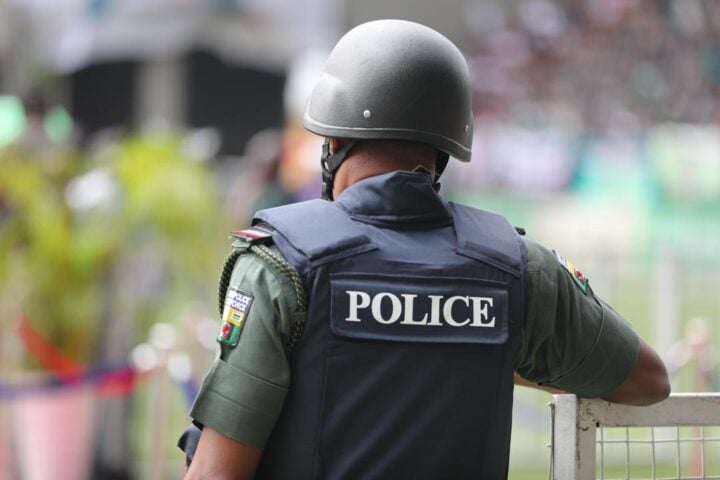
The new NWC is already moving to occupy the headquarters, buoyed by a Federal High Court ruling granting it access and directing security agencies to provide protection. The Turaki camp, however, is contesting that decision and preparing fresh appeals.
This phase of the crisis is critical. Control of the secretariat often translates to control of party administration, communication and, ultimately, recognition by key stakeholders, including the Independent National Electoral Commission (INEC).
Jungudo Mohammed underscored this point: “But with the INEC monitoring of our convention recent publishing of the new NWC on the INEC website, I think that settles it all.”
He also warned that “anyone that attempts to disrupt the peaceful conduct and activities of the NWC will risk facing the wrath of the law.
“So, very soon, I can assure you, we will have the Wadata Plaza open for the activities of the party, especially as we approach the 2027 elections.”
If consolidated, such institutional control could tilt the balance decisively in favour of the Wike faction—at least in the short term.
Our correspondent learnt that the Wadata Plaza national secretariat of the party is currently been swept for possible occupation by the Wike faction after the Easter break.
A party caught between politics and courts
For analysts, the unfolding situation reflects a familiar pattern in Nigeria’s party politics: parallel structures, legal battles and prolonged uncertainty.
A public affairs analyst, Jide Ojo, notes that the convention may have complicated reconciliation efforts “because one party has claimed victory, has successfully held its convention, leaders have been emerged, unless a court of competent jurisdiction decided to nullify that convention they may be the one to determine the future of PDP for the next four years.”
He added that a negotiated convention would have been a more stabilising option, especially given Wike’s political influence, but time pressures and legal uncertainties likely shaped the current outcome.
According to him, more troubling for the PDP is the potential for elite defections and shifting alliances. Speculation around possible moves by Seyi Makinde and Bala Mohammed, whether real or exaggerated, feeds into a broader perception of instability within the party.
Ojo stated that even a Supreme Court ruling may not offer a clean resolution.
He said: “Even when the Supreme Court decides as we have seen in the case of the Labour Party, in spite of the Supreme Court decision, the two factions that went to court are still contesting the validity and authenticity of what the Supreme Court decision says.
“But whether Supreme Court can even decide before the time permitted by the Electoral Act is another thing, because all the activities are in roller coaster.”
The road to 2027
At its core, the PDP crisis is no longer just about leadership; it is about the party’s viability as a coherent opposition force ahead of the 2027 elections.
With parallel conventions, competing legal claims and hardening political positions, the space for compromise appears to be shrinking.
The Turaki faction risks marginalisation if the Wike camp consolidates institutional control; while the Wike bloc faces legitimacy questions that only the courts or a political settlement can resolve.
Sources within the party say the implications of the split is beyond having two parallel leaderships.
“The implications are that the party can no longer speak with one voice as no single bloc can represent the interest of the party,” said an official who doesn’t want to be named.
Others say the development has further put fears into the minds of those hoping to run for various elective office in 2027 as they’re not sure Which faction would carry the day at the end of the day.
“People want to contest for State and National Assembly seats on the platform of the party but cannot do because they’re not sure Which of the factions would be recognised by the courts,.” he stated.
If the Wike faction is recognised, the party may not present a candidate in the forthcoming elections while of the Turaki faction wins then it would have hurry and present one
As the tug of war persists it is clear that the party would not go into the 2027 elections with the vim and fervour it was used to.
DAILY TRUST.