ABUJA — President Bola Tinubu’s nominees as chief executives of the Nigerian Upstream Petroleum Regulatory Commission, NUPRC, and the Nigerian Midstream and Downstream Petroleum Regulatory Authority, NMDPRA, yesterday, told senators that they would implement far-reaching reforms to stabilise the country’s oil and gas sector.
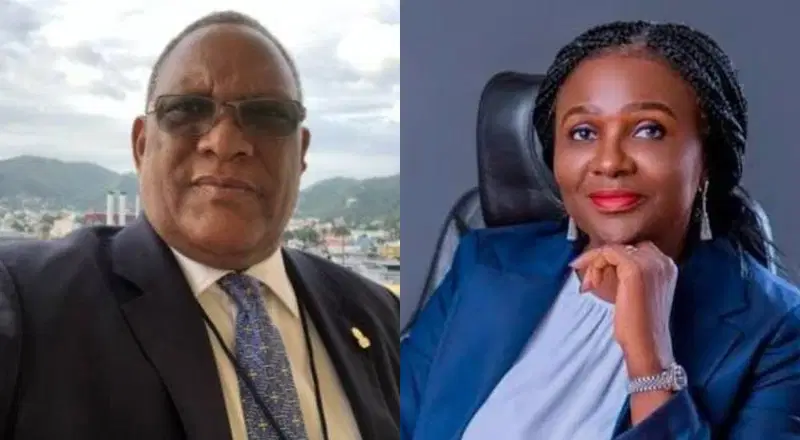
Following a letter from President Bola Tinubu confirming the appointments of Oritsemeyiwa Eyesan for NUPRC and Engineer Saidu Mohammed for NMDPRA, the Senate screened the duo as the new chief executives of Nigeria’s oil and gas regulators yesterday.
The Nigerian oil and gas industry faced a major shake-up on Wednesday following resignation of the chief executive NMDPRA, Farouk Ahmed, amid allegations of corruption and his counterpart in the NUPRC, Gbenga Komolafe. Komolafe and Farouk Ahmed were appointed in 2021 after the Petroleum Industry Act, PIA, came into force.
Barely 24 hours after, President Tinubu forwarded names of their replacements to the Senate for confirmation. While Eyesan is to replace Komolafe in NUPRC, Mohammed will replace Farouk Ahmed at NMDPRA.
Excitement at screening
During the screening, the appointments excited the likes of Senator Adams Oshiomhole (APC Edo North), who said he hopes to drink to Farouq’s resignation.
During the question and answer session, the nominees pledged that they will carryout far-reaching reforms anchored on digitisation, strict contract enforcement, investor confidence and accelerated gas development.
The nominees were screened by three Senate Committees namely Petroleum Resources (Dowstream) chaired by Senator Kawu Abdulrahman (APC, Kano South); Petroleum Resources (Upstream) chaired by Senator Eteng Williams (APC, Cross River Central); and Committee on Gas chaired by Senator Jarigbe Agom Jarigbe (APC, Cross River North).
The nominees outlined policy directions that will help stop revenue leakages, restoring discipline across the value chain and unlocking Nigeria’s vast oil and gas potential under the Petroleum Industry Act.
Digitisation crucial to regulation — Eyesan
Responding, Eyesan, who is set to lead the upstream regulator, disclosed that collaboration, technology-driven regulation and credible data management would be central to her approach.
She told the committees that Nigeria is currently losing enormous value due to manual processes and poor integration of systems in an industry that is rapidly becoming digital worldwide.
“We are still largely manual while the world is moving at jet speed. Without digitisation and real-time data, you cannot truly understand what you are regulating, and you will continue to lose money,” she said, noting that effective oversight depends on accurate numbers, asset integrity monitoring and transparent systems.
Eyesan averred that her years in the industry had shown that progress is fastest when regulators, operators and policymakers work together to identify bottlenecks and jointly resolve them.
saying, “we must collaborate with stakeholders, identify our pain points and address them collectively. That is how we move the needle forward.”
She assured the Senators that she would fully deploy the PIA as a regulatory tool to re-position the upstream sector, attract fresh investments and ensure Nigeria does not fall behind in the global energy transition, just as she described the law as a “valuable document” that provides the framework needed to unlock opportunities in oil and gas, if properly implemented.
During her presentation, she highlighted her role in resolving long-standing disputes with international partners, restoring confidence during periods of divestment threats and facilitating multi-billion-dollar investments in deep offshore projects.
Eyesan, a graduate of Economics from the University of Benin, spent nearly 33 years at the Nigerian National Petroleum Company Limited, NNPC, and its subsidiaries, retiring as Executive Vice President, Upstream.
She also recalled signing Nigeria’s first non-associated gas development contract and contributing to an increase in crude oil production from about 1.3 million barrels per day to 1.8 million barrels per day during her tenure.
“Having worked as an operator and participated in resource development, I believe I have the competence to regulate the industry and ensure we maximise the enormous opportunities before us,” she said.
We’ll restore discipline to gas, petroleum supply chain — Mohammed
On his part, the nominee for the Midstream and Downstream, Mohammed, who disclosed that he will pay serious attention to restoring discipline to Nigeria’s gas and petroleum supply systems, particularly through strict enforcement of contracts and quality standards.
“Gas is not a favour; it is a commodity. It must be sold on the basis of enforceable contracts from the producer to the transporter and the end-user,” he said, arguing that weak contractual frameworks had contributed to persistent gas shortages, especially in the power sector.
According to him, uninterrupted gas supply to some power plants is only possible where contracts exist and obligations are clearly defined, adding that enforcing the Gas Network Code and strengthening regulatory oversight will help eliminate chaos in the system and encourage investors to return to the sector.
Mohammed also warned that Nigeria must protect its local refining and processing capacity, however cautioned that failure to do so could lead to the sector suffering the same fate as the collapsed textile industry.
The nominee, who emphasised the importance of exports, stressed that domestic needs must be met first to ensure energy security.
Pledging to revive pipeline transportation of petroleum products, attract billions of dollars in investments for gas processing infrastructure and strengthen quality assurance through in-house laboratory facilities, he added “you cannot enforce quality if you do not have the capacity to test and certify products yourself.”
Mohammed, born in Gombe in 1957, is a chemical engineering graduate of Ahmadu Bello University, Zaria, with decades of experience across the oil and gas value chain.
According to him, he has served as Managing Director of the Nigerian Gas Company and Kaduna Refining and Petrochemical Company, as well as Group Executive Director/Chief Operating Officer, Gas and Power at NNPC, just as he also played key roles in major projects such as the Escravos–Lagos Pipeline Expansion and the Ajaokuta–Kaduna–Kano Gas Pipeline.
Energy efficiency central to economic recovery — Sumaila
In his remarks, Chairman of the Senate Committee on Petroleum Resources (Downstream), Senator Sumaila, explained that the screening is taking place at a critical moment for Nigeria, adding that boosting energy production and efficiency is central to national economic recovery.
He said that further engagements with the nominees will continue into January to deepen legislative–regulatory collaboration.
The next stage will be the presentation and consideration of the report at plenary, then confirm the nominees as a new phase in the regulation of Nigeria’s oil and gas industry in the President Tinubu government.
Meanwhile, President Tinubu is expected to present the 2026 budget proposal to a joint sitting of the National Assembly today, just as he forwarded the 2025 budget proposal of the Niger-Delta Development Commission, NDDC two weeks to the end of the year to the Senate.
VANGUARD.