The peace brokered by President Bola Ahmed Tinubu among key political actors in Rivers State has again collapsed, as the State House of Assembly yesterday commenced impeachment proceedings against Governor Siminalayi Fubara and his deputy, Prof. Ngozi Odu.
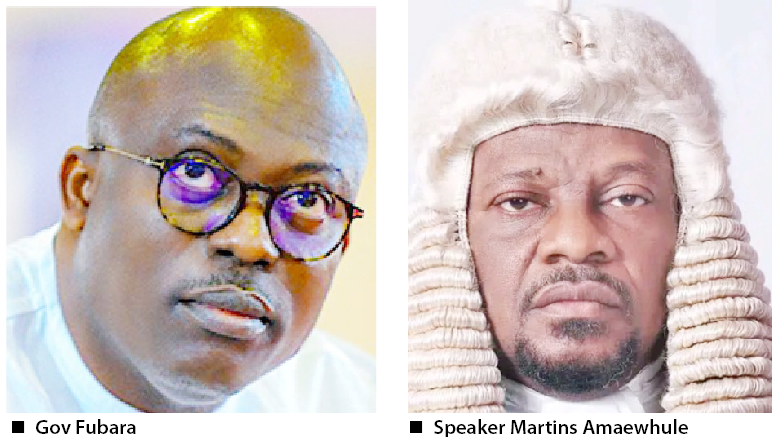
The Assembly, led by Speaker Martins Amaewhule, issued a notice of impeachment, citing alleged gross misconduct, constitutional breaches and financial impropriety against Fubara and Odu.
This is the third impeachment attempt against Fubara in less than three years, deepening the political crisis that has gripped Rivers State since his fallout with his predecessor and Minister of the Federal Capital Territory (FCT), Nyesom Wike.
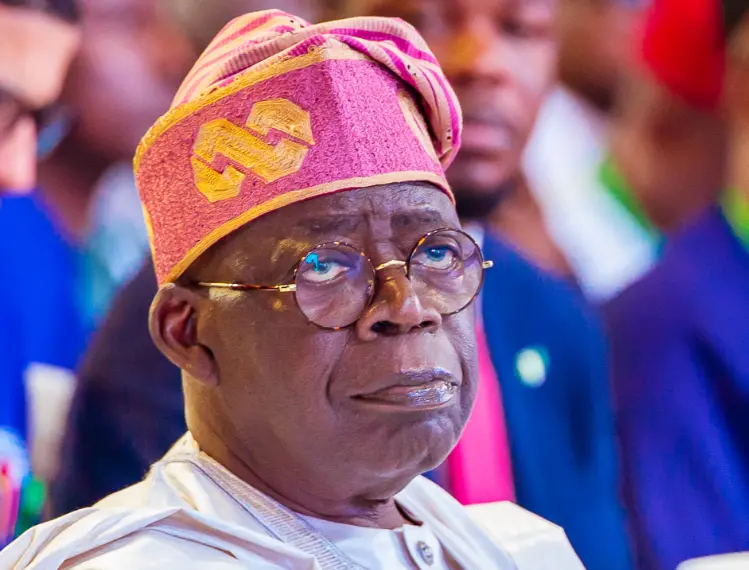
Tinubu had first intervened in December 2023 when lawmakers loyal to Wike attempted to impeach Fubara, leading to a peace deal involving the governor, the Assembly and the FCT minister.
In March 2025, Tinubu declared a state of emergency in Rivers State after the Assembly initiated impeachment proceedings against him, suspending the governor, his deputy and the lawmakers. Ibok-Ete Ibas was appointed administrator during the emergency rule.
Before the emergency period elapsed, the president once more brokered peace among the political actors, paving the way for Fubara’s return.
However, Thursday’s action by the Assembly suggests that the latest truce has collapsed.
Assembly levels 8 allegations against Fubara
During plenary, the Rivers State House of Assembly yesterday levelled eight allegations of gross misconduct against Governor Fubara, citing Section 188 of the 1999 Constitution.
Presenting the allegations, Majority Leader Major Jack accused the governor of: (1) reckless and unconstitutional expenditure of public funds; (2) unconstitutional misappropriation of public funds; (3) hindering the Rivers State House of Assembly from performing its constitutional duties; (4) illegal appointment of persons without screening by the Assembly as required by the constitution; and (5) seizure of salaries and funds meant for lawmakers.
Other allegations include: (6) seizure of the salary of the Clerk of the House, Emeka Amadi; (7) refusal to implement constitutional provisions on the financial autonomy of the legislature and the judiciary; and (8) withholding of funds meant for the Rivers State House of Assembly Service Commission, thereby hindering its operations.
The lawmakers subsequently signed the impeachment notice, which they said would be served on Fubara within seven days.
Deputy Leader Linda Stewart also moved a motion seeking Odu’s impeachment over alleged constitutional violations.
Alleged breach of peace deal cited as trigger
Political observers, however, say the impeachment move is beyond the allegations, pointing instead to claims that Fubara reneged on understandings allegedly reached during earlier peace efforts, including an agreement not to seek a second term.
Sources also said the impeachment move was triggered by disagreement over a supplementary budget allegedly pushed by Wike’s allies in the State Assembly. Fubara was said to have rejected the proposal, insisting that the N1.48 trillion 2025 budget passed during the emergency rule was sufficient.
Fubara, who succeeded Wike in 2023, has had his tenure marked by intense rivalry between the executive and the legislature; a crisis that culminated in a state of emergency and his suspension.
Since his reinstatement last September, the rift has persisted, with the Assembly demanding the presentation of the 2025 budget and a list of commissioners; requests the governor is yet to meet. The struggle over Fubara’s second-term ambition has since emerged as the central fault line in the Rivers’ political crisis, with Wike pledging to “correct the mistake of 2023” in 2027.
Following Fubara’s alleged rejection of the supplementary budget, Wike reportedly summoned political allies, including Assembly members, to the residence of an elder statesman, Ferdinand Anabraba, in Port Harcourt.
Sources said Fubara, sensing an imminent confrontation, accelerated his alignment with the All Progressives Congress (APC) with the approval of President Tinubu.
“The thinking was that bringing Fubara into the APC would weaken Wike’s leverage,” an insider said.
Fubara was also said to have reneged on the agreements that allegedly required him to reinstate Sergeant Awuse as chairman of the state’s traditional rulers’ council and appoint new commissioners.
“Fubara felt those conditions would completely undermine his authority. That was the final straw,” a source said.
Fubara, a mistake for Rivers – Speaker
Speaking after the impeachment notice on Fubara, Speaker Martins Amaewhule described the governor as a “mistake” and accused him of acts of gross misconduct.
He said that the notice would be served on the governor within seven days, in line with constitutional provisions.
He added that the impeachment process had formally commenced and that his responsibility was to transmit the notice as required by law.
Amaewhule also warned that any attempt by the governor to present the appropriation bill or the Medium-Term Expenditure Framework while the allegations were under investigation would not halt the process.
According to him, the governor had consistently failed to present a budget, insisting that if Fubara was willing to do so, he would have acted earlier.
He said: “The particulars of gross misconduct have a lot to do with refusal to present a budget and spending outside the appropriation law.
“There is a notice, and the process of impeachment is on, and having received it, my job is to forward it, and it is important that we allow this process to go through.
“The motion says that in the event that the governor tries, as he has always tried to do, to be smart by half, to now say he wants to bring the Appropriation Bill, or to present the Medium-Term Expenditure Framework, let him hold on and allow the investigation of the allegation brought against him and the deputy governor to be concluded.
“In any case, the governor does not want to present any budget, because if he wanted to, he would have brought it all this while.
“Siminalayi Fubara is a mistake; Rivers State has never had it this bad. In the entirety of Nigeria, Siminalayi Fubara and the deputy governor, Prof. Ngozi Odu, are the only ones in office at the sub-national level that are yet to present the 2026 appropriation bill in the entire country.”
The speaker also accused the governor of undermining the legislature, alleging that Fubara had boasted of seeking presidential intervention to restrain the Assembly and had described the 10th Rivers Assembly as a “toothless bulldog”.
He said, “I’m sure if you go to the West African region or Africa, you will not find any subnational government that has not presented the 2026 appropriation bill.
“Who would believe that in this 21st century, a state like Rivers won’t have an appropriation bill either presented or passed? Nothing is holding the governor from presenting it; he chose not to.
“And the governor has been boasting that he will always go and meet the president for him to call us and give us instructions. He has been saying to his followers that this 10th Rivers Assembly is nothing but a toothless bulldog, and we can’t do anything or enforce the constitution.
“This is a sad commentary on our democracy. Sir Siminalayi Fubara and his deputy are nothing but a threat to democracy, and if they are left in office, I don’t know what will happen,” he said.
He explained that the impeachment move was primarily based on the refusal to present the budget, noting that several meetings had previously been held with President Tinubu and Wike, in an effort to resolve the crisis.
The governor has yet to comment publicly on the development. Daily Trust was also unable to obtain a reaction from his administration, as there is currently no spokesperson or commissioner for information in place.
Tinubu, APC leaders urged to intervene
Political analysts in the state yesterday called on President Tinubu and the national leadership of the APC to intervene, noting that both Fubara and the lawmakers are now members of the same party.
One of them, Comrade David-West Benewarie David, said: “This has become an internal party affair. The governor is the leader of the party in the state and should call the lawmakers to order. Where he cannot, the national leadership of the APC should intervene.”
He also alleged the continued influence of Wike over the Assembly members.
He said: “I thought the president had resolved these issues, and they went to Abuja and they came back with a peace accord, all of a sudden it appears the peace is not peace, rather it wants to turn to pieces. So my humble opinion is that Rivers State House of Assembly are APC members, the governor is an APC member, automatically it turns out to be an internal party affairs and if indeed the governor is the number one citizen, he is the leader of the party, it behoves on the governor to call the assembly members as the leader of the party to settle these rifts.
Another analyst, Omatsogunwa Jerry, said the impeachment threat posed no real danger to Fubara.
“This is the last gasp of a dying horse. The governor is not deterred by these plots,” he said.
Dr Fyneface Dumnamene, Executive Director of Advocacy Centre, however, said indications suggested the Assembly was determined to remove the governor.
“No one can stop the Assembly from performing its constitutional duties if the governor has committed impeachable offences,” he said, urging all parties to respect due process.
Presidency mum; APC, INC, IYC reject impeachment
With the president already considered an interested party in the Rivers State crisis owing to his past involvement, Daily Trust made several attempts to ascertain whether the Presidency was planning to intervene again. However, phone calls and messages sent to Bayo Onanuga, Special Adviser to the President on Information and Strategy and Daniel Bwala, Special Adviser to the President on Policy Communications, were not returned.
While the national leadership of the All Progressives Congress (APC) has also not commented on the development, with attempts to reach its spokespersons unsuccessful, a faction of the party in Rivers State, led by Chief Emeka Beke, rejected the impeachment move, describing it as untenable and warning lawmakers against actions capable of destabilising the state.
In a statement by its spokesman, Darlington Nwauju, on behalf of the Beke-led faction, the party reaffirmed the independence of the legislature but faulted the impeachment process.
The statement noted that the 2025 federal budget provides a legal framework that allows state governors to spend funds within a six-month window at the beginning of a fiscal year. It warned APC members in the Assembly against allowing themselves to be influenced into destabilising the Rivers State government.
Former PDP spokesman, Sydney Tambari, also urged lawmakers to “sheathe their swords,” noting that Fubara had made significant concessions in the interest of peace and describing the impeachment move as an unfortunate development at the start of the year.
The Ijaw National Congress (INC) and the Ijaw Youth Council (IYC) similarly condemned the impeachment attempt, urging the Assembly to allow Fubara to complete his tenure.
“This is a time for governance, not war,” IYC President, Dr Alaye Theophilus, said.
Groups ask Tinubu to sack Wike as minister
Similarly, a coalition of leaders within the APC, operating under the APC Leaders Forum (ALF) and the Tinubu/Shettima Solidarity Movement (TSSM) has called for Wike’s removal as FCT minister over alleged insubordination, anti-party activities and conduct capable of threatening national unity.
In an open letter dated January 7 and addressed to President Tinubu through the APC National Chairman, Prof. Nentawe Yilwatda, the groups said Wike’s actions were incompatible with his continued stay in the cabinet of an APC-led government.
The letter, jointly signed by Dr Emeka Okoro, Dr Adekunle Balogun, Ibrahim Yusuf and Abdulkareem Isiaka, was made public yesterday as members staged a peaceful protest at the APC National Secretariat in Abuja.
The groups said the rally was part of efforts to “defend party integrity, democratic values and the Renewed Hope Agenda” of the Tinubu administration.
Central to their grievances are allegations that Wike, who is not formally registered as a member of the APC, has launched sustained attacks on the party’s national leadership.
They cited remarks allegedly made by Wike during a visit to Oyigbo Local Government Area of Rivers State on January 5, 2026, in which he reportedly accused the APC National Secretary, Ajibola Basiru, of interfering in Rivers politics for personal gain.
According to the letter, Wike’s comments, including a warning that those meddling in Rivers affairs would “get their fingers burnt”, amounted to intimidation and a direct affront to the APC National Working Committee.
The coalition said such statements undermined the authority of the party leadership and violated the discipline expected of a serving minister in an APC-led government.
They warned that retaining Wike in the cabinet could plunge the APC into avoidable crises ahead of the 2027 general elections and urged President Tinubu to act decisively.
Procedure to impeach a governor in Nigeria
Notice of allegations
A written notice alleging gross misconduct must be signed by at least one-third (1/3) of the members of the State House of Assembly. The notice is then presented to the Speaker.
Service of notice
The Speaker must serve the notice on the Governor within seven days. The notice must clearly outline the specific allegations.
Resolution to investigate
Within 14 days of receiving the notice, the House votes on whether to investigate. The motion requires the support of not less than two-thirds (2/3) of all members. If it fails, the process ends immediately.
Constitution of an investigation panel
If the motion passes, the Speaker requests the Chief Judge of the State to constitute a seven-member panel. Members must be individuals of unquestionable integrity and must not be politicians or public servants.
The panel has three months to investigate the allegations. The Governor has the right to defend himself personally or through lawyers. A fair hearing is mandatory.
Panel’s report
The panel submits its findings to the House. If no misconduct is found, the process ends. If misconduct is established, the House proceeds to the next step.
Final removal vote
The House must pass a resolution supported by at least two-thirds (2/3) of all members. Once passed, the Governor is immediately removed from office.
DAILY TRUST.