Screenshot
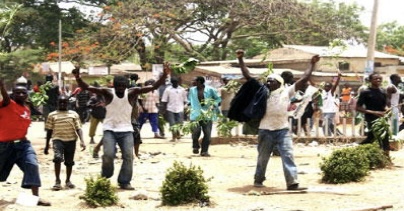
Youth restiveness has remained a recurring challenge in many parts of Nigeria, and Delta State is not exempted.
While Delta is blessed with abundant human and natural resources, recurring incidents of youth unrest, unemployment-driven agitation, and social dissatisfaction continue to pose threats to peace, security, and development.
Addressing youth restiveness requires deliberate, strategic, and inclusive actions that tackle its root causes rather than merely its symptoms. To effectively reduce and ultimately eradicate youth restiveness in Delta State, a multi-dimensional approach is necessary. They included but not limited to the following:
Employment and Economic Empowerment
Unemployment and underemployment remain primary drivers of youth restiveness. When young people are idle, frustrated, and economically excluded, they become vulnerable to manipulation and social vices.
The Delta State Government, in partnership with the private sector, should expand vocational and technical training programmes, strengthen entrepreneurship initiatives with access to start – up grants and soft loans.
The State Government should encourage local content policies that prioritize the employment of Delta youths in oil, gas, and other industries; Promote agriculture, digital economy, and creative industries as viable income sources. This restores dignity, builds self-reliance, and reduces susceptibility to unrest.
Quality Education and Skills Development.
Education remains the most powerful tool for social transformation. However, beyond formal education, there is a growing need for market-relevant skills.
Improving technical colleges (which the state Government has done), ICT hubs, innovation centres, and vocational institutes across the state will equip youths with practical skills suited to today’s economy. Digital literacy, coding, renewable energy technology, creative arts, and agribusiness should be prioritized to prepare young people for both local and global opportunities.
Youth Inclusion in Governance and Decision-Making.
Many youths feel marginalized in the governance processes. Exclusion breeds resentment. Government institutions should create structured platforms where young people can contribute to policy discussions, community development planning, and state programmes. Youth advisory councils, town hall meetings, and leadership mentorship programmes can bridge the gap between government and young citizens. When youths are heard and involved, they become partners in progress rather than adversaries of the system.
Strengthening Community Engagement and Dialogue.
Open communication between government, traditional rulers, community leaders, and youth groups is essential in preventing conflict escalation.
Regular dialogue platforms can help identify grievances early and resolve them peacefully. Community-based conflict resolution mechanisms should be strengthened to manage tensions before they degenerate into violence.
Combating Drug Abuse and Social Vices.
Substance abuse significantly contributes to aggressive behavior and criminal activity among youths. A coordinated campaign involving schools, religious institutions, civil society, and security agencies is necessary to combat drug abuse. Establishing rehabilitation centres and awareness programmes will help redirect affected youths toward productive lifestyles.
Sports, Arts, and Cultural Engagement.
Sports and creative arts provide healthy outlets for youthful energy. Investing in sporting facilities, talent hunts, music and film development, and cultural festivals can channel youthful creativity positively.
Delta State has produced outstanding talents in sports and entertainment. Structured support systems can turn potential restiveness into productive excellence.
Transparent and Fair Distribution of Development Projects.
Perceived injustice and inequality in project distribution often fuel agitation. Ensuring equitable development across all senatorial districts and local government areas will reduce feelings of marginalization. Transparency in government programmes builds trust and confidence among young people.
Strengthening Security with a Human Face.
While security enforcement is necessary, it must be complemented with respect for human rights. A community policing model that fosters cooperation between security agencies and youths will enhance intelligence gathering and reduce confrontation.
Conclusion
Youth restiveness in Delta State is not an unsolvable problem. It is a social challenge rooted largely in unemployment and lack of opportunity. With strategic investment in education, empowerment, inclusion, and dialogue, the state can transform its youthful population into a powerful engine for growth.
The youths of Delta State are not a problem to be managed; they are a resource to be harnessed. By prioritizing their welfare and development, Delta State can secure lasting peace, sustainable progress, and a prosperous future for generations to come.