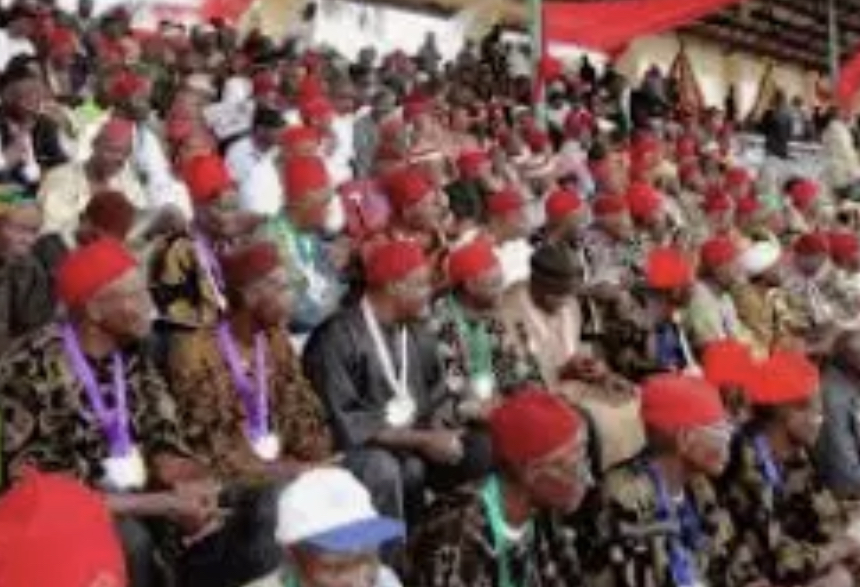
The Igbo Leaders of Thought (ILT), an elite assembly of Southeastern Nigerian intellectuals, traditional rulers and stakeholders, has condemned what it calls the systematic suppression of the opposition parties ahead of the 2027 general elections, warning that no democracy develops without a vibrant opposition. ILT cautioned that if the clampdown on the opposition is not urgently checked, it could seriously diminish the integrity of the 2027 general elections.
The group’s position came amid the recent alarm raised by the presidential candidate of Nigeria Democratic Congress, NDC, Mr. Peter Obi, over his safety and systematic frustration of his businesses, as well as the several judicial pronouncements against the key opposition parties aimed at destabilizing their preparations for the 2027 polls.
According to the group, the emasculation of the opposition could wreck Nigeria’s hard fought democracy and cause serious political instability in the country.
ILT, in a statement signed by Prof. Elochukwu Amucheazi, the President and Prof. Jerry Chukwuokolo, the Secretary, also frowned at the use of state institutions, including the judiciary, security agencies and the Independent National Electoral Commission (INEC), to incapacitate the opposition parties, to make them unable to compete with the ruling party for the 2027 general elections.
“The Igbo Leaders of Thought strongly condemns the ongoing suppression of opposition in Nigeria. If not curbed, it could derail plans for the 2027 general election, cause serious political instability, and derail our hard won democracy. Nigeria cannot afford another major political crisis arising from election. The country suffered dearly because of the mistakes of past elections. “Those who cannot remember the past are condemned to repeat the mistakes” ILT warned, and remained Nigerians of the violent political protest (Operation Wetie) that took place in 1962 in Western Nigeria which triggered a chain of events, including bloodletting and burning of properties, which eventually led to the first military coup in Nigeria on January 15, 1966. “In the Second Republic, a disputed governorship election triggered a devastating political upheaval in Ondo State, resulting in widespread burning of properties and loss of severally lives, ultimately paving the way for another military intervention in 1983. “If we cannot remember what happened in the First and Second Republics, we should be able to remember the political violence that trailed the 2011 presidential election, which according to Human Rights Watch, claimed over 800 lives in Northern Nigeria, including innocent youth corps members. We are not in any way trying to engage in scare mongering, but just appealing to those in authority in Nigeria to do what is right.”
Vanguard