The Delta State Government has intensified measures to prevent and manage flooding across the state, with authorities stepping up preparations for the possibility of a major flood emergency.
The state government says it has identified flood-prone communities and designated strategic locations that could serve as Internally Displaced Persons, or IDP, camps if residents are forced to leave their homes.
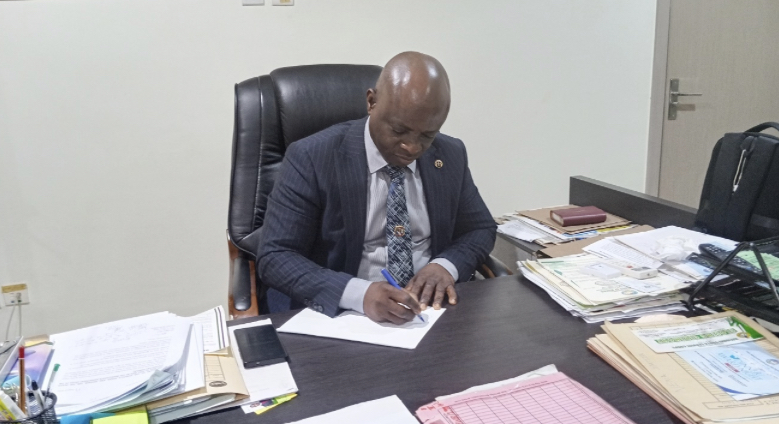
The disclosure was made by the Commissioner for Bureau for Special Duties, Hon. Terry Etagherure, who is also the Co-Chairman of the Delta State Flood Committee.
Speaking in Asaba, the Commissioner said the state government was taking a proactive approach to flood management rather than waiting until the rainy season reaches its peak or until official flood forecasts are released before taking action.
According to him, the state Flood Committee regularly meets to assess the level of preparedness and develop strategies for responding to possible emergencies.
Representatives from local government areas considered vulnerable to flooding are also involved in the response mechanism, ensuring that information and emergency plans can be coordinated at the local level.
However, the Commissioner clarified that the flooding currently being experienced in some parts of Delta State should not necessarily be regarded as a major flood disaster.
He described the situation as flash flooding, explaining that in many cases, the water recedes within two or three days when there is no further rainfall.
Despite this clarification, the state government says it is not taking the situation lightly.
One of the major concerns identified by the government is the condition of drainage systems across some communities.
The Commissioner pointed to blocked drainage channels and indiscriminate dumping of refuse as significant factors responsible for flooding in locations that would ordinarily not experience serious waterlogging.
When drainage channels are blocked by refuse, water is unable to flow freely. During heavy rainfall, the accumulated water can quickly overflow into streets, homes and business premises.
The government has therefore continued to sensitise residents about the dangers of dumping refuse into gutters, drainage channels and waterways.
According to the Commissioner, efforts are also ongoing to clear blocked drainage systems and improve the movement of stormwater.
A committee within the Ministry regularly visits communities to educate residents and encourage them to keep drainage channels free from refuse and other materials capable of obstructing the flow of water.
The Commissioner stressed that flood control cannot be achieved by the government alone.
He said effective management of flooding requires cooperation among ministries, government agencies, local government authorities and residents.
The state government, he added, maintains a working relationship with the Ministry of Environment and other relevant agencies in dealing with drainage, waste management and broader environmental challenges.
Another issue attracting attention is the construction of buildings and other structures on waterways.
The Commissioner explained that matters relating to structures erected on waterways largely fall under the ministry responsible for urban development.
He said action had already been taken against some structures identified as obstructing waterways.
Such actions, he noted, could include stopping construction activities and removing structures where necessary.
The government’s position is that waterways must remain open to allow water to move naturally, particularly during periods of heavy rainfall.
Meanwhile, the Delta State Government says it has also made provisions for relief materials that could be distributed to communities affected by flooding.
The Commissioner disclosed that relief materials are already available and that government has compiled information on affected communities and residents.
Distribution, he said, would be based on the level of need.
This is particularly important for residents whose homes, businesses or livelihoods may be affected by flooding.
The government says it has continued to respond to communities affected by flooding in previous years and will maintain that responsibility if the current situation worsens.
The Commissioner assured residents that the government was closely monitoring developments.
He said that if the situation escalates into a major flood, the state would activate its emergency response plans.
Such measures could include evacuating residents from severely affected areas, moving them to designated locations and providing relief materials to support them during the emergency.
For residents living in flood-prone communities, the message from the government is clear: preparedness must be a shared responsibility.
Authorities are urging residents to stop dumping refuse in gutters, drainage channels and waterways.
Residents are also encouraged to keep their surroundings clean and report blocked drainage channels or other conditions that could worsen flooding.
The government’s warning comes at a time when heavy rainfall can quickly turn a minor drainage problem into a serious flooding situation.
While the state government maintains that the current flooding in some areas is largely flash flooding rather than a major disaster, its decision to identify IDP camps and stock relief materials shows that authorities are preparing for a possible escalation.
The broader challenge, however, goes beyond emergency response. Flood control requires regular maintenance of drainage infrastructure, responsible waste disposal, proper urban planning and strict enforcement against activities that obstruct natural waterways.
It also requires residents to play their part by ensuring that the drainage systems around their homes and communities are not turned into dumping grounds.
For Delta State, the immediate priority is to prevent flash flooding from developing into a wider emergency and to ensure that adequate measures are in place should a major flood occur.
The state government says its Flood Committee will continue to monitor the situation and coordinate with relevant ministries, agencies and local governments.
And if the situation deteriorates, officials say emergency plans are ready to be activated.
For now, residents are being urged to remain alert, cooperate with government officials and take individual precautions, particularly those living in areas historically vulnerable to flooding.
The key message is that flood preparedness cannot wait until water has already entered people’s homes.
Early preparation, proper drainage, responsible waste disposal and cooperation between government and communities could make a significant difference in reducing the impact of flooding across Delta State.