Talks among opposition political parties to pick a sole candidate to field in the coming presidential election are still on, with less than two months to the January 16, 2027 polls.
Since August, opposition political parties have mooted dropping their individual platforms to rally around a common presidential candidate ahead of next year’s general elections, agreeing that it would be more daunting to enter the race on separate platforms.
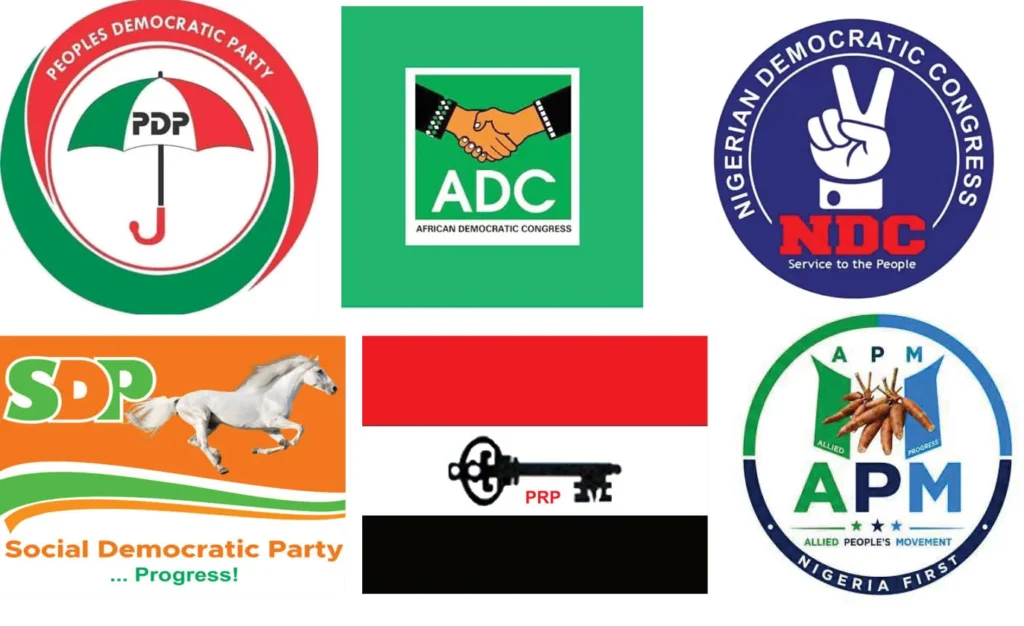
Presidential candidates of the African Democratic Congress (ADC), Atiku Abubakar; Nigeria Democratic Congress (NDC), Peter Obi; Allied Peoples Movement (APM), Seyi Makinde; Peoples Redemption Party (PRP), Donald Duke and the Social Democratic Party (SDP), Adewole Adebayo, have been involved in the talks.
The G100, now known as the Coalition for Democracy, on which platform the idea was sold, has affirmed its commitment to sustaining the talks by making the parties forge a united political front. The coalition explained that deliberations on the matter would form the agenda of a summit of the opposition parties slated for November 23 in Abuja.
A statement signed by the convener, Salihu Mohammed Lukman, on behalf of the coalition, said the physical presence of presidential candidates and their running mates at the meeting would demonstrate their willingness to work together in the national interest.
The Coalition attaches particular importance to the attendance, in person, of every presidential candidate and their running mates of the participating political parties,” he said.
The coalition has held previous meetings for this purpose, which have yet to yield the expected results due to the inability of the major parties in the coalition to agree on a common candidate.
Our correspondents found out that hope for a possible consensus rose since last week when some of the presidential candidates began to shift ground, saying they are not averse to stepping down if a credible candidate is picked from among them.
Duke had stated last week that he was ready to step down for any candidate decided by the coalition.
“But at the end of the day, I’ll be sportsmanlike about it. If the group, and so far there are quite a number of us, comes up with an agreement that this is the best person to lead the coalition, you can’t say you’re a democrat and not be subject to the rules of democracy,” he stated recently.
Our correspondents report that the presidential candidate of the Allied Peoples Movement (APM), Governor Seyi Makinde of Oyo State, has confirmed that major opposition presidential candidates are actively discussing a possible alliance ahead of the 2027 general elections.
Makinde disclosed that he is currently engaged in discussions with Atiku and Obi, as opposition politicians explore possible ways of working together ahead of the polls.
The Oyo governor disclosed during an interview aired by Arise News on Friday, stressing that discussions among the opposition figures were ongoing.
“We’re still discussing,” Makinde said, adding that “Not only am I open (to the alliance talks), but we are actively discussing this.”
Makinde said the ultimate objective of the discussions was to promote good governance and work towards ending the dominance of the All Progressives Congress (APC) at the federal level.
He, however, made it clear that an alliance would not necessarily mean that one candidate would automatically step down in favour of another, saying the opposition must first agree on the best strategy before deciding the structure and leadership of any possible alliance.
“Our biggest challenge is, first, to agree on what is the best course of action, and then seek an alliance,” he said.
The governor said political decisions should not be based on emotions or personal interests, particularly when opposition parties are considering the possibility of presenting a common candidate.
Responding to questions on whether former Vice-President Atiku could eventually emerge as the preferred candidate of the opposition alliance, Makinde said such a decision would have to be based on a combination of factors.
He said the opposition would have to examine the manifestos of the various candidates, their historical performance and the views of Nigerians before reaching a conclusion.
“We just won’t say, ‘Oh, okay,’ take an emotional decision and say, ‘Oh, it’s you.’ We have manifestos now; we have certain things in that manifesto.
“We will sit down; have a historical performance. We also have the sentiment of the people. All of those things will come together and arrive at a decision,” Makinde said.
When contacted, the National Publicity Secretary of the ADC, Malam Bolaji Abdullahi, said the ADC is part of the coalition talks but that it has not taken a position on the matter because it is at the summit that whatever was agreed upon would be unveiled.
He said, “ADC is involved in the process of the coalition, but the outcome of the summit would be announced by the conveners on Monday.”
The NDC had earlier maintained that its presidential candidate, Obi, would not step down for any consensus candidate from outside the party.
NDC spokesman, Ossai Director, told Daily Trust that since other opposition presidential candidates, especially Atiku, had refused to step down, Obi would not either.
He said although the party is awaiting the announcement of the consensus candidate by the organisers, the NDC will not accept any other candidate aside from Obi.
Recall that the PDP, under the leadership of Kabiru Tanimu Turaki, has said it is supporting the quest by the opposition to produce a single presidential candidate against the APC.
National Publicity Secretary of the Interim National Working Committee (INWC) of the PDP, Comrade Ini Ememobong, told Daily Trust that Atiku, Obi, Makinde, among others, gave their words and are committed to the process. He added that these candidates have not rescinded their decisions.
Beyond deciding on a single candidate
The summit, according to the coalition, is also expected to provide a platform for opposition parties to agree on a framework for political cooperation, including a common approach to the 2027 presidential contest.
It said three documents developed by working groups drawn from participating parties following their first summit in Abuja on August 31, 2026, would be adopted at the next summit, while parties would also sign a National Covenant for Democratic Renewal and adopt a Framework for Opposition Unity and a National Reform Programme as part of efforts to institutionalise their cooperation.
It added that the candidates would participate in a dedicated session to affirm their commitment to shared democratic principles.
“The strength of this Coalition will be measured not only by the commitments made by our parties, but also by the willingness of those who aspire to lead our country to work together. Leadership begins with the willingness to stand together when the national interest demands it. That is a message no one can deliver by proxy.
“Whatever differences may exist among our parties, there can be no disagreement on the right of Nigerians to freely choose their leaders and have their votes count,” it said.
The November 23 summit, Lukman explained, is expected to bring together national chairmen and secretaries of participating parties, members of their National Working Committees, presidential campaign councils, presidential candidates and their running mates.
Traditional and political leaders, including the Alaago of Kajola Alago, Ileshan, Oba Oladipo Olaitan, and Professor Ango Abdullahi, have also been invited to address the gathering on what the coalition described as the doctrine of a necessary democratic opposition.
The Coalition for Democracy emerged from the August 31, 2026 opposition summit in Abuja, pioneered by the ADC, APM, NDC, PDP, PRP and SDP.
The first summit, convened by G100 in collaboration with the House of Representatives Minority Caucus, provided a platform for opposition leaders to discuss political cooperation and challenges confronting Nigeria’s democracy.
Since then, working groups from the participating parties have been developing proposals to formalise their cooperation beyond individual political interests and informal agreements.
The coalition said its doors remained open to other political parties willing to commit to democratic renewal, constitutional governance, electoral integrity and national reform.
‘Ego, rival ambitions threaten opposition consensus bid’
A political analyst and lecturer at the Kano State College of Arts, Science and Remedial Studies (CAS), Dr Kabiru Sa’idu Sufi, expressed doubts over the chances of opposition parties successfully uniting behind a single presidential candidate ahead of the 2027 elections despite efforts by the group.
He said past attempts at similar political arrangements had often failed to materialise, making many Nigerians skeptical about the prospect of a unified front against the ruling All Progressives Congress (APC).
Dr Sufi said the success of the initiative would depend on the seriousness of negotiations among the parties involved and their willingness to make compromises.
“Many times in the past, we have seen such statements, though maybe not in the manner of this G-100 initiative, but previous attempts ended up not becoming a reality. That is why people may not be 100 per cent hopeful,” he said.
to the analyst, meaningful engagements, negotiations and binding agreements among stakeholders would be crucial to the success of the alliance.
The lecturer noted that smaller political parties appeared more willing to support a consensus arrangement, but argued that the main challenge lay with the larger opposition parties and their leading figures.
“The problem is usually with the bigger opposition parties, likely because of ego, their political strength and other factors. The challenge does not really lie with the smaller parties,” he said.
Dr Sufi specifically pointed to the difficulties that could arise if key opposition figures, including Atiku and Obi, are required to step aside for one another in the interest of a unified ticket.
“The two bigger candidates will find it difficult to step down for one another. Unless serious politics, horse-trading and negotiations take place, that is where the problem lies,” he said.
He added that the ambitions of the candidates, the investments made by their supporters and the belief that they could still win independently could complicate any agreement on a consensus candidate.
However, he said a successful alliance would significantly alter the political landscape ahead of the 2027 presidential election and pose a formidable challenge to the APC.
“If it happens, it is going to give the ruling APC its toughest time. It means the party will have to go back to the drawing board because it may not currently foresee that possibility,” he said.
The analyst added that a unified opposition platform could dramatically change political calculations and improve the opposition’s chances of winning the presidency in 2027.
“An alliance will definitely change the pattern of politics towards the 2027 elections if it eventually succeeds,” Dr Sufi added.
‘It won’t produce any tangible result’
Speaking on the issue, Associate Professor Sikiru Lanre Nurudeen, Deputy Vice-Chancellor of Al-Hikmah University, Ilorin, dismissed the G100 coalition as a potentially inconsequential political force in the 2027 presidential election.
He argued that its members lacked the individual electoral strength and political relevance to alter the contest.
He said the coalition appeared more interested in remaining politically visible and attracting public attention than in presenting a credible challenge to the dominant political forces ahead of the election.
The analyst insisted that the individual profiles and electoral influence of the conveners should be examined before attributing any significant weight to their collective ambition.
On the possibility of some members stepping down to support a single candidate, the political scientist expressed doubts about the electoral implications of such an arrangement, particularly given the timing of the coalition’s decision and possible legal limitations on withdrawing or replacing candidates after the relevant deadlines.
He argued that if the opposition was genuinely committed to presenting a formidable alternative, it should have resolved its candidate selection strategy and made the necessary arrangements before the expiration of the relevant electoral timetable.
Nurudeen, however, identified a possible alliance between Atiku and Obi as one combination capable of producing a significant electoral impact, particularly if their respective political strengths could be successfully harmonised across the North and South.
He said such an arrangement could improve the opposition’s electoral prospects but maintained that the political realities currently favour President Bola Tinubu and the ruling APC.
According to him, Tinubu’s advantage extends beyond incumbency to the APC’s extensive political structure, which he said has established networks from the federal level to states and local governments across the country.
He also identified the ruling party’s access to resources, political patronage and capacity for last-minute electoral mobilisation as important factors that could shape the outcome of the election.
Nurudeen observed that electoral outcomes in Nigeria were not determined principally by manifesto debates or the volume of political activities in newspapers and on social media.
He noted that many voters were more concerned about candidates and political parties capable of addressing their immediate needs.
He said parties with the financial resources, grassroots networks and organisational capacity to mobilise voters when elections approached would enjoy a considerable advantage over groups whose influence was largely confined to public pronouncements.
“The people who have the resources and the structure will be able to mobilise. A lot of people can continue to make noise in newspapers and on social media, but that is not where elections are decided,” he said.
Daily Trust