The Federal Government has filed a 13-count treason charge against six persons accused of involvement in a plot to overthrow the administration of President Bola Tinubu through a coup d’état.
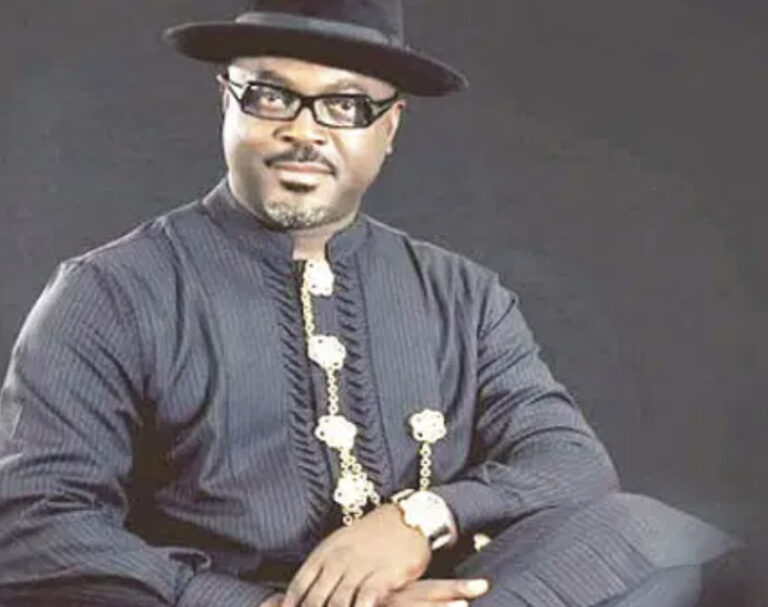
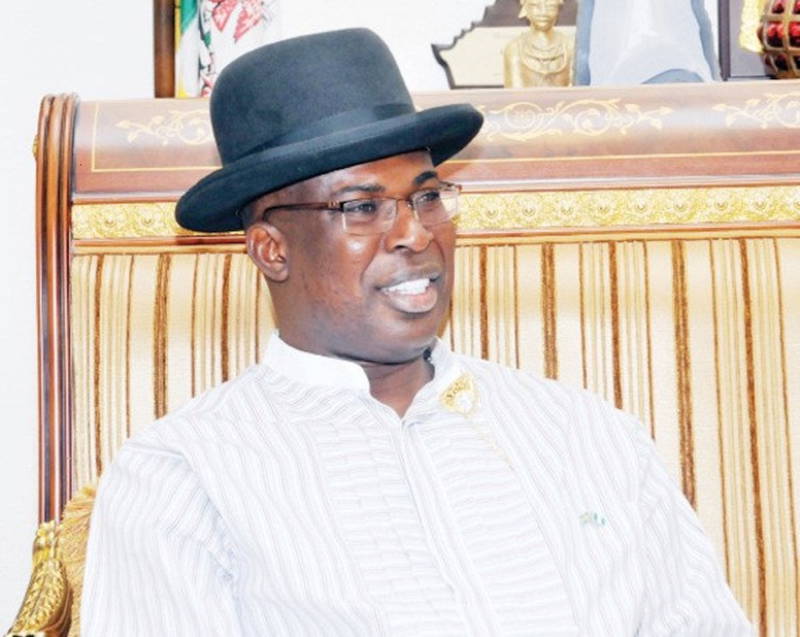
Those listed as defendants in the charge, lodged before the Federal High Court in Abuja, are former Minister of State for Petroleum Resources under the late former President Muhammadu Buhari, Timipre Slyva, a retired Major General, Mohammed Ibrahim Gana; a retired Naval Captain, Erasmus Ochegobia Victor; a serving Police Inspector, Ahmed Ibrahim; and three others, including Zekeri Umoru, Bukar Kashim Goni, and Abdulkadir Sani.
Sylva, who was former Bayelsa State governor, was listed as a defendant in the case, though the court was told he was currently at large.
The charge was filed before the court by the Office of the Attorney-General of the Federation and Minister of Justice, and signed by the Director of Public Prosecutions of the Federation, Rotimi Oyedepo, SAN.
The allegations against the defendants bordered on treason, terrorism, and alleged failure to disclose security intelligence and money laundered in furtherance of acts of terrorism.
According to the FG, the defendants conspired among themselves to levy war against the state to overawe President Tinubu, thereby committing an offence punishable under Section 37(2) of the Criminal Code.
They were further alleged to have had prior knowledge of a planned treasonable act involving one Colonel Mohammed Alhassan Ma’aji and others but failed to alert the appropriate authorities.
Government maintained that the defendants had knowledge of the plot and intended to commit treason, as evidenced by their refusal to “give the information thereof with all reasonable despatch to either the President or a peace officer.”
Similarly, the defendants were accused of failing to take preventive steps, as they “did not use any reasonable endeavours to prevent the commission of the offence.”
Other allegations against them centred on terrorism-related offences under the Terrorism (Prevention and Prohibition) Act, 2022.
They were said to have conspired with one another to commit an act of terrorism in the Federal Republic of Nigeria.
Specifically, the serving Police Inspector, Ibrahim, and another defendant, Umoru, were accused of participating in meetings linked to terrorist activities.
Government alleged that they acted “in a bid to further a political ideology which might seriously destabilise the constitutional structure of the Federal Republic of Nigeria.”
The defendants were further accused of providing support for terrorism.
The prosecution told the court that they knowingly and indirectly rendered support to facilitate acts of terror.
Tracing some of the transactions it said were linked to terrorism financing, FG alleged that one of the defendants, Goni, “indirectly retained the aggregate sum of N50,000,000, which forms part of the proceeds of an unlawful act, to wit: terrorism financing,” while another defendant, Sani, allegedly retained N2 million from a similar source.
The charge also disclosed that Umoru had accepted a cash payment of N10,000,000 without going through a financial institution. It was alleged that he also retained an additional N8.8 million suspected to be proceeds of terrorism financing.
Inspector Ibrahim, on his part, was accused of taking possession of N1 million linked to the same alleged scheme.
All financial-related counts in the charge were brought under the Money Laundering (Prevention and Prohibition) Act, 2022.
Meanwhile, barring any last-minute change of plans, the defendants are expected to be arraigned before trial Justice Joyce Abdulmalik today.
Recall that rumours of the coup plot first surfaced in October 2025, when the government abruptly cancelled a planned military parade to mark Nigeria’s 65th Independence Anniversary.
At the time, officials cited security threats, but speculation quickly linked the cancellation to a possible coup plot.
The military denied the suggestion but in January, it announced that 16 officers were to be tried before a military court for attempting to oust the president.
It is unclear whether the charges filed in the Federal High Court, which also include terrorism and money laundering, are in addition to the military prosecutions.
Sylva, who served as Petroleum Minister from 2019 to 2023 under late former President Muhammadu Buhari and was also governor of Bayelsa State from 2007 to 2012, denied links to a coup plot after his house was ransacked by investigators last October.
An arrest warrant was issued for him the following month in a separate case launched by the country’s anti-corruption agency.
At the time, his spokesman said the former minister was in the UK for a medical check-up, noting that the allegations were politically motivated.
Attempts to get reactions from associates of Chief Sylva on the matter were unsuccessful yesterday as they simply said “No comment.”
However, one of Sylva’s associates, who spoke on condition of anonymity, said: “At this point, I have to be very careful too because we are talking about a coup allegation.
‘’You have to be careful how you speak, or they may want to call you in for questioning. I have suffered this. Since November last year, I have not had any rest from the authorities.”
Trial must not be politicised, says Bayelsa elder
In his remarks, a prominent Bayelsan and convener of the South South Reawakening Group, Elder Joseph Ambakederimo, said: “If anyone runs foul of the law, he should face the consequences of his actions in a competent court of law.
“We must respect constitutional order and the rule of law. But the prosecution must prove its case beyond reasonable doubt. This trial should not be politicised; it should be an open trial, and the court should be allowed to do its work to its logical conclusion. This is the only way justice will be seen to have been done.”