
Screenshot
The Delta State Government has reaffirmed that malaria elimination is now within reach, calling on residents, health workers, and stakeholders to intensify collective efforts toward ending the disease across the state.
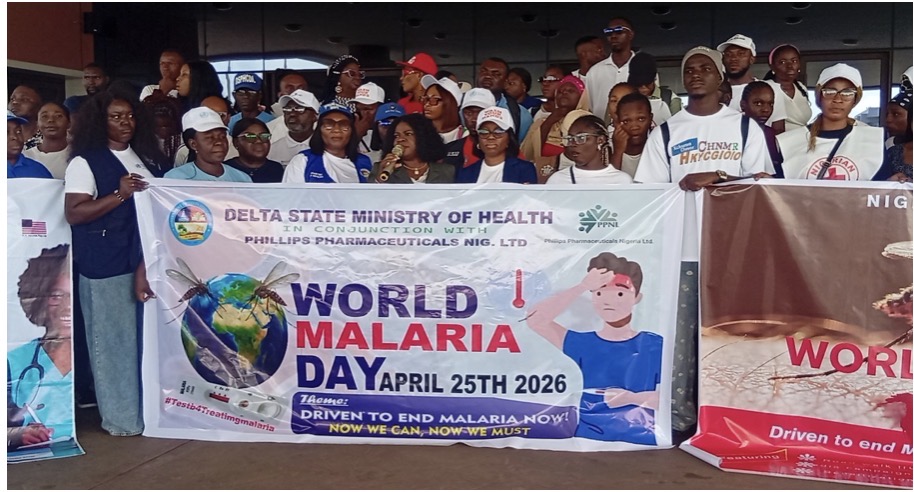
Commissioner for Health, Dr. Joseph Onojaeme, made the call during the 2026 World Malaria Day commemoration in Delta State, held under the global theme, “End Malaria: Now We Can. Now We Must.”
Dr. Onojaeme said the theme conveyed both urgency and hope, stressing that while remarkable progress had been recorded, sustained and decisive action remained necessary to completely eradicate malaria.
He disclosed that the 2025 National Indicator Survey placed malaria prevalence in Delta State at 6.5 per cent, a significant decline from 10 per cent in 2022, describing the development as clear evidence that existing strategies were yielding measurable results.
According to him, following the 2025 Insecticide-Treated Nets campaign, to which the state government contributed over N50 million in counterpart funding, treated mosquito nets are now widely available in homes across the state, while health centres and hospitals have been equipped with Rapid Diagnostic Test kits and essential malaria prevention materials for children under five and pregnant women.
He added that the anticipated deployment of malaria vaccines across Africa, including Nigeria, would further strengthen the fight against the disease.
The Commissioner commended Governor Sheriff Oborevwori for his unwavering support, while also acknowledging development partners, research institutions, particularly Delta State University Teaching Hospital, as well as doctors, nurses, vector control teams, and community health workers for their steadfast commitment.
He assured that the government would continue to prioritize primary healthcare funding, uninterrupted malaria testing and treatment, and stronger environmental health interventions to eliminate mosquito breeding sites.
Dr. Onojaeme charged health workers and educators to remain frontline champions by promoting the consistent use of insecticide-treated nets, upholding the principle of “test before treatment,” and ensuring patients complete prescribed medication.
The Commissioner also urged residents to maintain clean surroundings, eliminate stagnant water, clear overgrown vegetation, and seek prompt medical attention within 24 hours of fever onset, warning strongly against self-medication and the use of leftover drugs, stressing that proper diagnosis and treatment remain critical to defeating malaria.
The event was marked by a symbolic awareness walk led by the functioning Permanent Secretary of the Ministry of Health, Dr. Mrs. Uche Okwe, alongside ministry officials, health workers, development partners, and other critical stakeholders, reflecting a united commitment to public health advocacy and malaria prevention.
Addressing participants at the Prof. Chike Edozien Secretariat Complex, the functioning permanent Secretary emphasized the importance of preventive healthcare, healthy living, and shared responsibility in building a healthier Delta, noting that the fight against malaria requires sustained community participation and collective resolve.
While underscoring the significance of the celebration, Dr. Okwe noted that malaria remains a major global public health concern, with over 280 million cases and approximately 610,000 deaths recorded worldwide.
She, however, emphasized that Delta State has made remarkable progress in reducing its malaria burden, with prevalence declining from 10 per cent in 2022 to 6.5 per cent in 2025, adding that the government and relevant stakeholders were intensifying efforts to drive the figures down even further and ultimately achieve malaria elimination across the state.


