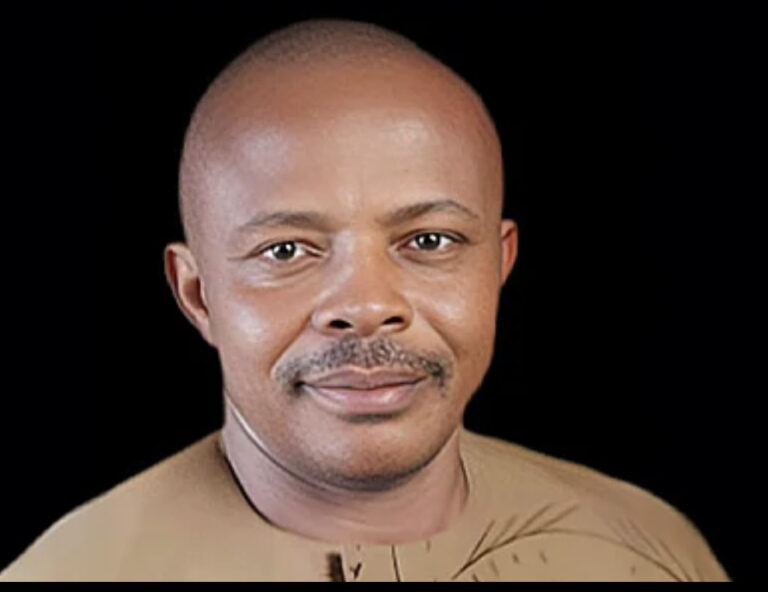
The Director-General of the Delta State Traffic Management Authority (DESTMA), Hon. Dr. Benjamin Okiemute has reaffirmed the Authority’s unwavering commitment to enforcing a disciplined driving culture and ensuring safer roads across Delta State through strategic collaboration, continuous personnel reorientation, and strict adherence to professionalism.
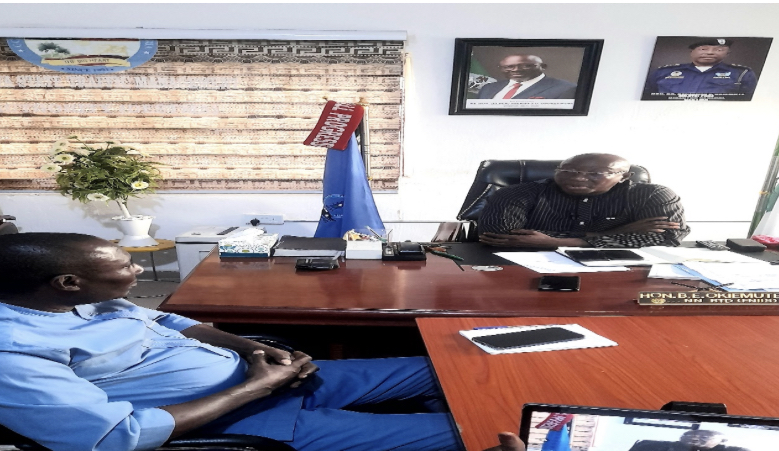
Speaking during a press interview held at the Authority’s Headquarters in Asaba on Wednesday, Dr. Okiemute described traffic management as a collective responsibility that requires the cooperation of motorists, government agencies, and the general public.
According to him, DESTMA’s mandate goes beyond directing traffic, as the Authority is empowered by the Delta State Traffic Management Law to complement the efforts of the Federal Road Safety Corps (FRSC) whenever necessary.
“There is no conflict of responsibility between DESTMA and the Federal Road Safety Corps. Our operations are complementary. While FRSC has its constitutional mandate, DESTMA is empowered by the laws of Delta State to effectively manage traffic and promote a disciplined driving culture across the state. Whenever the need arises, we work hand-in-hand because our common objective is to save lives and ensure orderliness on our roads,” he stated.
The Director-General clarified that DESTMA officers do not engage in arbitrary vehicle searches, stressing that officers only request to inspect motorists’ driver’s licences or other relevant documents where traffic laws have been violated.
“We are not on the roads to harass anyone or search vehicles indiscriminately. However, where a traffic infraction has been committed, our officers are empowered to verify that the driver is duly licensed and legally qualified to be on the road. Our focus remains traffic management and compliance with traffic regulations.”
Responding to questions on the deployment of officers around school environments, Dr. Okiemute explained that DESTMA gives priority attention to schools, especially during peak hours when pupils are arriving and closing from classes.
“Our children deserve to move to and from school safely. That is why our officers are strategically deployed at major school junctions during peak periods to control traffic and prevent avoidable accidents.”
He recalled a recent incident around Unity Secondary School, Asaba, where a DESTMA officer was knocked down by a reckless motorist while performing official duties.
“Recently, one of our officers was knocked down while controlling traffic at Unity Secondary School. She sustained injuries and had to undergo medical treatment, including scans, at the Asaba Specialist Hospital. Incidents like this underscore the sacrifices our personnel make daily and further justify the need for hazard allowances for officers who put their lives on the line to protect others.”
Highlighting achievements recorded under his leadership, the Director-General said the Authority has witnessed significant reforms through improved personnel orientation, operational efficiency and infrastructural development.
He disclosed that one of the landmark initiatives introduced since assuming office is the bi-weekly morning pep-talk sessions held every Monday and Thursday to continually reorient officers on professionalism, ethical conduct and service delivery.
“When I assumed office, one of my priorities was changing the mindset of our personnel. Every Monday and Thursday, we hold morning pep talks where officers are constantly reminded that they are ambassadors of the government.
These sessions have significantly improved discipline, professionalism and public engagement among our officers.”
On allegations of misconduct and extortion levelled against some officers, Dr. Okiemute maintained that the Authority investigates every complaint thoroughly before arriving at conclusions.
“We operate an open-door policy regarding complaints. However, experience has shown that many allegations are not entirely accurate. Since my assumption of office, about seventy per cent of complaints have been disproved after reviewing available video evidence.”
He noted that in several instances, offending motorists attempt to induce officers with money to evade enforcement before later accusing them of extortion.
“Some motorists, because they are in a hurry or have committed traffic offences, offer money to officers in a bid to avoid sanctions. Unfortunately, when such attempts fail or circumstances change, they return to accuse our personnel. Let it be clear that both the person offering a bribe and the one accepting it are equally culpable under the law.”
Dr. Okiemute advised motorists to regard traffic officers as partners rather than adversaries.
“The moment many drivers see a uniform, they become defensive, even before any conversation begins. We appeal to motorists to see our officers as partners in public safety. Obey traffic rules, cooperate with lawful directives and together we can reduce road crashes and save lives.”
Speaking on illegal parking and indiscriminate passenger loading, the Director-General explained that the provision and management of designated bus stops fall primarily under the Ministry of Transport, although DESTMA continues to enforce traffic regulations where indiscriminate stopping creates congestion and accidents.
“Where functional bus stops and parks exist and motorists make proper use of them, traffic congestion and road crashes will reduce considerably. We will continue collaborating with relevant government agencies like the Ministry of Transport to achieve this objective.”
He also appealed to members of the public to partner with the Authority by reporting areas where traffic control is required.
“We may not be everywhere at the same time. We encourage residents to inform us of locations experiencing persistent traffic challenges, and we will promptly deploy officers to such areas.”
Commending the Governor of Delta State, Rt. Hon. Sheriff Oborevwori for his unwavering commitment to infrastructure development through the MORE Agenda, Dr. Okiemute said the administration’s investments in quality roads and flyovers have significantly improved traffic flow across the state.
“The MORE Agenda is producing visible results. Good roads, expanded road networks and flyovers have eased congestion and made traffic management more effective. These infrastructural investments have also enhanced economic activities and improved the commuting experience of residents.”
He further praised Governor Oborevwori for supporting the ongoing transformation of DESTMA, particularly through projects that have strengthened the Authority’s operational capacity.
“One of the major innovations under this administration is our modern impound lot at the old State Secretariat. Apart from beautifying the environment, it has made enforcement more efficient and secure. Before now, we spent millions of naira replacing parts stolen from impounded vehicles. Today, those challenges have been substantially addressed.”
The Director-General reaffirmed his commitment to aligning the Authority’s programmes with the Governor’s developmental vision.
“I remain committed to advancing the vision of His Excellency. His reforms are practical and impactful, and I am confident that with sustained support, Delta State will continue to witness greater progress in traffic management and public safety.”
Dr. Okiemute concluded by urging all road users to cultivate the habit of obeying traffic regulations, stressing that road safety is a shared responsibility.
“Our mission is not to punish motorists but to save lives. Every traffic rule obeyed is a life protected. Let us all support government efforts by driving responsibly, respecting traffic officers and making safety our collective priority. Together, we can build a safer, more orderly and more prosperous Delta State.”
He reaffirmed that DESTMA remains committed to delivering efficient traffic management services in line with the MORE Agenda of the Delta State Government while promoting a culture of discipline, professionalism and respect for the rule of law across the state’s road network.