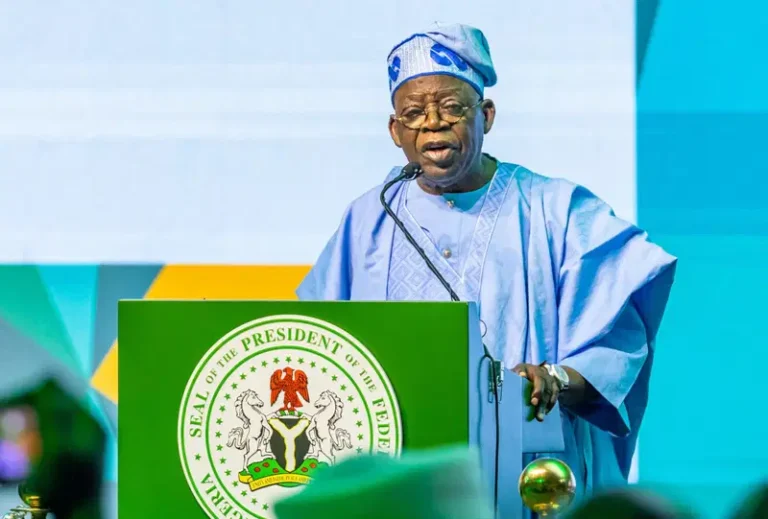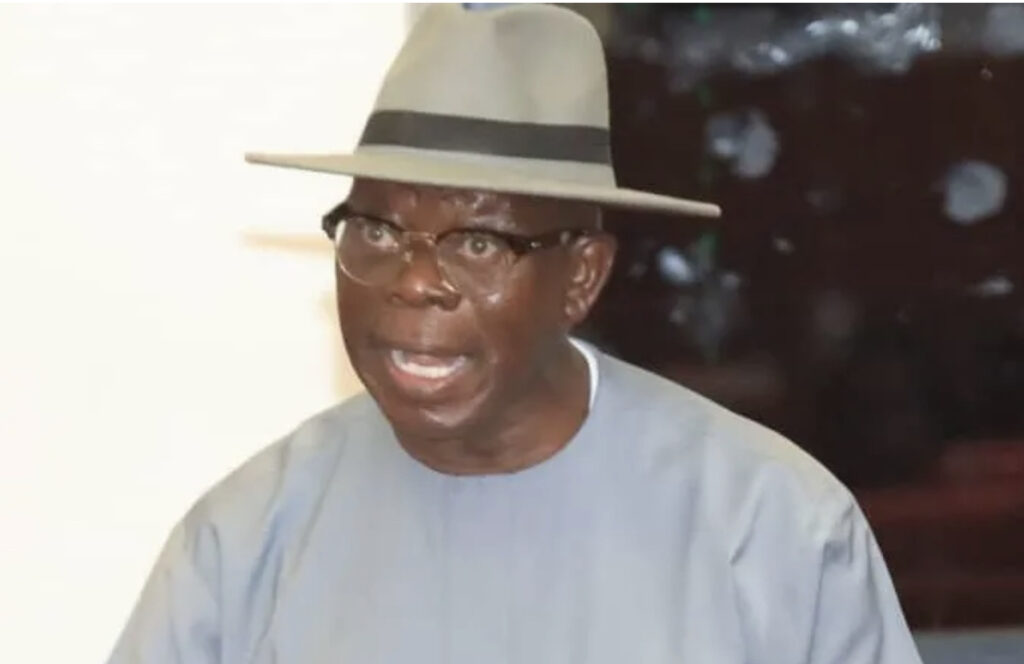
Former Governor of Edo State and Senator representing Edo North, Adams Oshiomhole, has urged Nigerians to dismantle ethnic and religious fault lines, saying such divisions undermine accountability, justice and national development.
Oshiomhole spoke at the 7th National Discourse of The Companion, the association of Muslim Men in Business and the Profession themed, “Nigeria’s Political Landscape and the Ethno-Religious Divides: Interrogating Nigeria’s Democracy in the Context of Multiple Diversity” held at the University of Lagos.
He said ethnicity had no place in a democratic system, arguing that it was often exploited by politicians to evade accountability and distract citizens from governance failures.
“In the context of democracy, ethnicity has no role to play. Ethnicity is invoked to prevent accountability,” he said.
The former governor said his experiences had shown him that ethnic politics was dysfunctional and should not determine leadership or political choices.
“As an Igbo man, I have gone through it. We shouldn’t be talking about this. I think a class of people bereft of ideas invoke ethnicity. In the process, the ideal of equity and justice is left,” he said.
Oshiomhole said Nigerians could unite when confronted by common challenges, regardless of their ethnic or religious backgrounds, noting that economic hardship did not discriminate.
“Hunger has no federal character,” he said.
He added that ethnic differences rarely featured in corporate boardrooms because the focus there was on achieving results, arguing that politics should similarly prioritise competence and national interest.
“There is no ethnic tension in Nigeria’s boardroom,” he said.
On religion, Oshiomhole warned against its manipulation for violence, intimidation and exploitation, stressing that genuine religious teachings promote peace and responsibility.
“Islam means peace. If Islam means peace, why will any Muslim help God to kill those who disrespected Him? God is the only person who has the power to kill,” he said.
He identified ethnicity and religion as two major fault lines that the younger generation must dismantle if Nigeria is to achieve sustainable development.
“Ethnicity and religion are the two fault lines the younger generation must fight to dismantle,” he said.
Oshiomhole called for a fairer society that creates opportunities and employment for all Nigerians, irrespective of their background.
“The future belongs to the younger people. You must discard ethnicity. It doesn’t add any value; it is inconsistent with the principle of democracy,” he said.
He said Nigeria’s diversity should be treated as an asset rather than a source of division.
“Our ethnicity shouldn’t be a source of challenge. Allah gave us the brain, resources, liquid and solid, gold. What more can God do for us? Let us resolve to be Nigerians,” he said.
Lagos State Deputy Governor, Dr. Kadri Obafemi Hamzat, also emphasized the need for Nigerians to make deliberate efforts to build a stronger national identity that transcends ethnic, religious and cultural differences.
According to him, ethnic and religious identities remain deeply rooted in the country’s social and political life, and the challenge was not to eliminate those identities but to prevent them from becoming instruments of division.
“The question that sociologists have not told us is how we marry our culture and democracy, without losing our identity and putting it into our democratic setting. And I think that will be the issue for us. As Nigerians, we must learn to accommodate our differences while we are also promoting a common national identity. The experience of other multi-ethnic societies showed the dangers of allowing identity and class differences to fuel conflict among us,” said the Deputy Governor.
Chairman of the occasion and former Governor of Kano State, Mallam Ibrahim Shekarau, called for greater religious tolerance and understanding among Nigerians.
He stated that there is no justification for religious conflict in a country where citizens, regardless of their faith, are all creations of Allah.
Mallam Shekarau admonished Nigerians to deepen their understanding of the teachings of their respective religions, noting that all faiths promote values such as love, kindness, justice and respect for others.
He emphasized that if Nigerians genuinely practised the teachings of their religions, the country would be a better place to live, adding that religious differences should not be allowed to fuel conflict or division in Nigeria.
Amir of the Companion, Imam Najim Jimoh said the lecture was aimed at interrogating the democratic principles, saying organisations like the Companion have a responsibility to create spaces where difficult national questions can be discussed respectfully.
Daily Trust