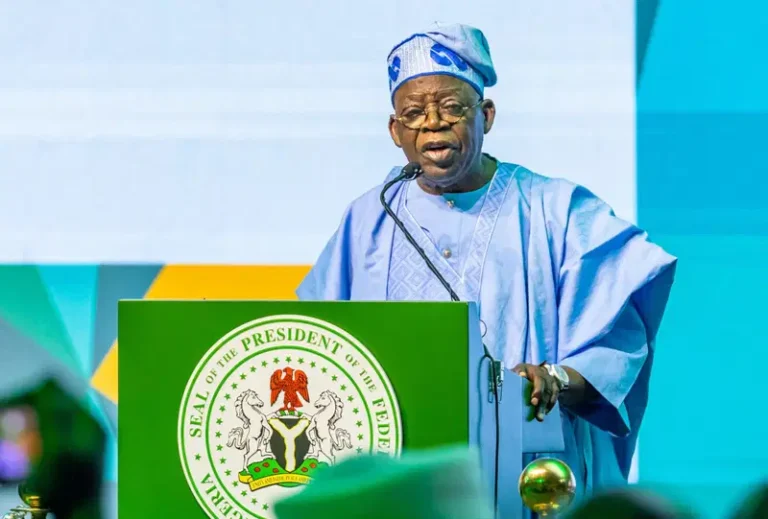
Three years after President Bola Ahmed Tinubu removed the petrol subsidy with a promise to free resources, attract investment and build a more efficient downstream petroleum sector, the much-touted modular refinery project remains elusive, Daily Trust reports.
Checks by Daily Trust revealed that only five of the 30 licensed modular refineries have been completed, while just three were operating during the period covered by the latest data from the Nigerian Midstream and Downstream Petroleum Regulatory Authority (NMDPRA).
It was also discovered that no new modular refinery has commenced operations in three years since the removal of subsidy.
The development has raised fresh questions about the government’s strategy for expanding domestic refining capacity and reducing the country’s dependence on imported petroleum products.
When President Tinubu announced the removal of petrol subsidy on May 29, 2023, the decision was presented as a painful but necessary economic reset.
The administration argued that funds previously committed to subsidising petrol would be redirected to infrastructure, job creation and other productive sectors of the economy.
For the refining industry, expectations were particularly high.
With petrol subsidy removed and the downstream sector deregulated, investors were expected to find domestic refining more commercially attractive. The government also envisaged a network of smaller refineries located close to crude-producing communities, particularly in the Niger Delta.
In 2022, the federal government said it was working to establish three modular refineries in each of the oil-producing states, particularly in the Niger Delta region.
Going by the plan, about 18 refineries were expected to be set up in the country’s six major oil-producing states in the Niger Delta, including Rivers, Bayelsa, Akwa Ibom, Delta, Edo and Cross River.
The then Minister of State for Environment, Sharon Ikeazor, in a statement, had said, “In a bid to find alternative sources of livelihood for artisanal refiners and to encourage them to disengage completely from their illegal activities, the Federal Ministry of Environment in collaboration with the Office of the Senior Special Adviser to the President on Niger Delta Affairs and other critical stakeholders, are working on the establishment of three modular refineries per state in the oil producing areas as a pilot scheme to engage them (artisanal refiners).
“These modular refineries are intended to be 100 per cent designed and manufactured in Nigeria using the expertise of government institutions such as the Ministry of Petroleum Resources, Federal University of Petroleum Effurun and Ahmadu Bello University Zaria.
“Others include the Ministry of Niger Delta Affairs, Niger Delta Development Commission, Petroleum Technology Development Fund, Nigerian Content Development and Management Board, National Agency for Science and Engineering Infrastructure, etc.”
But three years on, the plan has yet to materialise.
Recall that the Pan Niger Delta Forum (PANDEF) had called on President Bola Ahmed Tinubu to activate the Modular Refinery Development Fund proposed in 2018 to accelerate the establishment of modular refineries in the Niger Delta.
The forum said activating the fund would help expand Nigeria’s domestic refining capacity, create more economic opportunities in oil-producing communities and ensure that host communities derive greater benefits from the country’s petroleum resources.
Chairman of PANDEF, Godknows Igali, during a press briefing in Abuja, said recent reforms and policy changes in Nigeria’s oil and gas sector presented an opportunity for the federal government to introduce a robust programme that would encourage investment in modular refineries.
“These changes present another opportunity to call on the federal government to put in place a robust programme to promote the building of modular refineries in the Niger Delta.
“In 2018, the government had committed itself to setting up a Modular Refinery Development Fund, similar to the Solid Minerals Development Fund.
“This must be urgently looked into and encouraged as a way of carrying more host communities along in implementing the Petroleum Industry Act (PIA), creating more economic activities in the Niger Delta and ensuring that the sector has greater stability for the overall good of the country,” he said.
While Nigeria has made some progress with the takeoff of Dangote Refinery in 2024, which has transformed the scale of private refining, the promise that dozens of modular refineries would spring up across the oil-producing Niger Delta and significantly reduce dependence on imported products has yet to materialise.
Recent data from the NMDPRA illustrate the gap between ambition and reality.
Between December 2025 and June 2026, only three modular refineries — Waltersmith, Edo Refinery and Aradel — were operating. The OPAC and Duport modular refineries were shut during the period.
Together, the operating plants supplied an average of 562,000 litres per day of automotive gas oil, or diesel, as of June 2026.
The figures expose one of the central weaknesses of Nigeria’s modular-refinery strategy: having a refinery licence or even a completed plant does not necessarily translate into consistent production.
How operating modular refineries fare
Of the existing modular plants, Waltersmith Refining and Petrochemical Company remains the clearest example that the concept can work when financing, crude supply and technical execution come together.
Located at Ibigwe in Ohaji-Egbema, Imo State, the refinery began with a 5,000-barrel-per-day train commissioned in 2020. The Nigerian Content Development and Monitoring Board (NCDMB) invested $10 million for a 30 per cent equity stake in the project, helping to turn what had long been a policy ambition into a functioning refinery.
Waltersmith has also demonstrated that a modular refinery can be commercially viable. The NCDMB disclosed in 2024 that the company had declared a N4.5 billion dividend for 2023, with the government agency receiving an interim N450 million representing its share.
In April 2026, the NCDMB announced that Waltersmith had completed an expansion that increased its refining capacity from 5,000 barrels per day to 10,000 barrels per day. The expanded plant produces diesel, household kerosene, heavy fuel oil and naphtha.
Edo Refinery (ERPC), according to its parent company, AIPCC Energy, is a 6000-barrel per day modular refinery located in Ikpoba-Okha LGA, Edo State, in the Southern Niger-Delta region of Nigeria.
It is a 100% owned subsidiary of AIPCC Energy. The refinery is the first fully private independent modular plant in Nigeria set up as a solution to the government’s goals to increase local refining and gas processing in Nigeria.
The project is executed in two trains of 1,000 BPSD and 5,000BPSD, and has been commissioned and is fully operational. The refined products sold are diesel, naphtha and Low Pour Fuel Oil (LPFO).
At Ogbele in Rivers State, Aradel’s modular refinery represents another established player.
Aradel began refining through a 1,000-barrel-per-day mini-refinery in 2010 before expanding its operations. Its Ogbele asset now houses an 11,000-barrel-per-day, three-train modular refinery producing automotive gas oil, household kerosene, marine diesel oil, heavy fuel oil and naphtha.
The company’s integrated business model gives it an advantage because its refinery is linked to crude production from its upstream operations.
Aradel reported that refinery utilisation improved to 49 per cent in 2025, with refined-product output rising to 313.4 million litres.
According to the NMDPRA fact-sheet for June reviewed by our correspondent, WalterSmith recorded 53.95% capacity utilisation; Edo Refinery recorded 88.67% average capacity utilisation, while Aradel had 30.73% capacity.
Similarly, the two other listed refineries are OPAC and Duport. NMDPRA lists OPAC at 10,000 barrels per day and Duport at 2,500 barrels per day. But both were offline during the review period.
Some observers said the existing refineries are facing one of the biggest obstacles: crude supply. Others believe the business climate is not enabling for some modular refineries to take off while the existing ones are struggling to survive.
Daily Trust reports that Dangote Refinery has continued to face daunting challenges over crude supply despite the existing naira-for-crude supply obligations with the Nigerian National Petroleum Company Limited (NNPCL).
The problem is particularly serious for modular plants because their relatively small scale leaves little room for inefficiencies. While a large refinery can potentially negotiate supply contracts and spread costs across millions of barrels, a small refinery processing a few thousand barrels a day is much more vulnerable.
With the local crude shortage, Dangote Refinery has been importing feedstock to operate the 700,000-barrel refinery located in Ibeju-Lekki, Lagos.
Efforts to get a reaction from the Nigerian Midstream and Downstream Petroleum Regulatory Authority (NMDPRA) were unsuccessful, as phone calls to the contact of its spokesperson, George Ene-Ita, said the number switched off.
Experts cite lack of enabling environment
An oil and gas industry expert, Dr Marcel Okeke, in a chat with our correspondent, said the subsidy removal would have provided better outcomes if there were dozens of modular refineries.
According to him, the oil facilities would have marked the transformation of the Nigerian economy.
“So, it is one thing to issue a licence; it is another thing for the entire environment to be enabling for the beneficiaries of those licences to really set up. But it’s like the environment is not enabling them to set up. Without Dangote talking to you now, you can imagine the kind of hurdles that it’s been going through for it to even stand to be who and what it is today.
“That even the government itself, upon trillions of billions of dollars that have gone into the so-called turnaround of existing refineries, is unable to get them running means there are really hurdles that you may not know.
“But those people who got the licences, after going through some of the hurdles or seeing what is ahead of them, decided not to do anything. Because it came to a point that it’s like Dangote was being sabotaged and even the ones that are supposed to be the regulators were saying all kinds of things against the company,” he said.
Another energy expert, Charles Uzoma, urged the government to support Nigeria’s modular refinery operators, arguing that increased production from the smaller-scale plants could reduce dependence on imported petroleum products and bring down the cost of diesel and kerosene.
He expressed disappointment that the government’s licensing programme had not produced the expected wave of new refineries.
He asked the government to investigate why many licensed projects had failed to move into production, particularly following the removal of petrol subsidy in May 2023.
According to him, the subsidy removal should have been accompanied by targeted support for emerging refiners to enable them to increase petroleum product supply.
“Since we have removed the subsidy on petroleum, the government should have just found a way of supporting this lower cadre of refining companies,” he said.
He said greater domestic production of the products could help reduce pressure on imports while easing the burden on consumers and businesses.
To address the situation, he urged the NNPCL and petroleum-sector regulators to convene a stakeholders’ meeting involving licensed modular refinery operators.
“My take is, given the limbo that is existing in the system, those in charge, particularly the NNPCL and, of course, the regulatory authorities, should call for stakeholders’ engagement,” he said.
Such an engagement, he argued, should establish why licensed operators have failed to commence production and identify the financing, technical, crude supply or regulatory constraints preventing them from doing so.
He said unlocking the sector would have wider economic benefits beyond increasing fuel supply.
“It is going to help the common man,” he said, adding that functional modular refineries would also “create more jobs and then create more markets.”
For Nigeria to fully benefit from its modular-refinery programme, he urged the federal government to move beyond licensing and provide the enabling environment and targeted support required to turn dormant projects into productive assets.
“I am asking the federal government to please do the needful, to help this very ecosystem to develop fully, become useful, become productive for the goodness of the economy and society,” he said.
‘Subsidy removal not an end in itself’
On his part, a professor of Petroleum Economics, Wumi Iledare, noted that the PIA was set up mainly to create a regulatory and market framework “in which private capital could participate competitively, efficiently, and sustainably.”
He said: “The removal of subsidy was therefore not an end in itself. It was the first critical step toward establishing a competitive downstream petroleum market in Nigeria—a market driven increasingly by competition, efficiency, investment, and consumer choice rather than by administrative price determination.
“The intent of the PIA to deregulate the downstream sector becomes even clearer when viewed through the lens of energy security: availability, accessibility, affordability, reliability, and sustainability.
“A secure petroleum market cannot be built indefinitely on government-controlled prices, fiscal subsidies, or the assumption that the government must remain the principal market participant.
“What we are witnessing today is, in many respects, the emergence of the market the PIA envisioned. Nigeria’s refinery capacity and refining activities have improved significantly.
“New and rehabilitated refining capacity is changing the structure of the downstream market, while competition among market participants is creating incentives for efficiency, investment, and innovation.
“The growing participation of private investors demonstrates that capital responds when the market provides clearer and more sustainable economic signals.
“The real test, therefore, is no longer whether deregulation should happen. The question is whether we will allow the emerging market to become genuinely contestable, competitive, efficient, and resilient.
“A contestable market does not necessarily require hundreds of players; it requires that existing players cannot permanently insulate themselves from competition and that credible potential entrants can enter when market opportunities arise.”
Daily Trust