The Delta State Ministry of Information has proposed a total expenditure of ₦4.08 billion for the 2027 fiscal year, with emphasis on strengthening state-owned media organizations, improving operational capacity and enhancing citizen engagement.
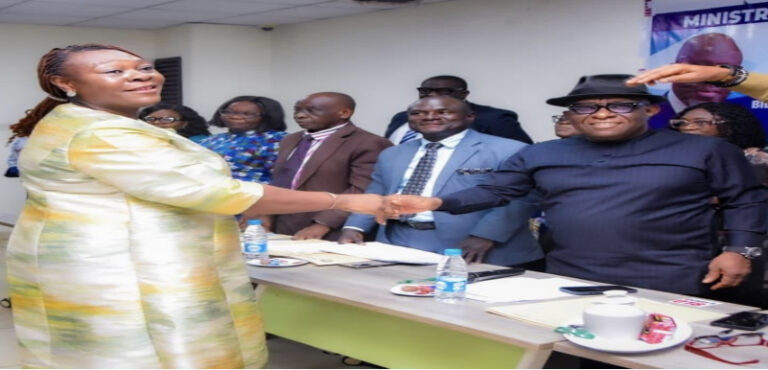
The Functioning Permanent Secretary of the Ministry, Mrs. Stella Macaulay, disclosed this during the bilateral discussions with Ministries, Departments and Agencies (MDAs) on the preparation of the 2027 budget, organized by the Ministry of Economic Planning.
Macaulay revealed that the Ministry recorded approximately 88 per cent of its annual revenue target as at June 2026, while outlining its priority areas for 2027 to include improved mobility and operational support, capacity building, digital communication, youth engagement, public enlightenment and efficient resource utilisation.
She explained that the proposed budget comprises ₦2.081 billion for recurrent expenditure and ₦2 billion for capital expenditure.
In his remark, the Delta State Commissioner for Economic Planning, Hon. Sonny Ekedeyan, described the budget as a social contract between government and the people, stressing that the exercise was a constitutional requirement aimed at ensuring transparency, accountability and effective justification of government expenditure.
The Commissioner, who described the budget cycle as the last of the first tenure of the present administration, appreciated public servants for their support and commitment to the government, urging them to sustain their confidence in the administration.
Providing an overview of the national economic situation, Ekedeyan said the Federal Government, upon assumption of office, inherited a challenging economy characterized by high debt obligations, foreign exchange difficulties and an unfavourable business environment.
He explained that the removal of fuel subsidy and the alignment of exchange rates were necessary measures taken by the Federal Government to address the structural challenges confronting the economy.
According to him, the reforms have helped improve government revenue, reduce the country’s debt burden and create more fiscal space for government to meet its obligations without excessive borrowing or resorting to money printing.
He said the positive effects of the reforms were also being felt at the state level, providing additional resources for the government to meet its financial obligations and execute development projects.
The Commissioner cited the State Government’s commitment to paying December salaries before December 18 and the 13th-month salary three days thereafter as evidence of improved financial capacity.
On the state’s financial performance, Ekedeyandisclosed that the administration had substantially reduced the inherited legacy debt of ₦463 billion by about ₦400 billion within the past three years.
The Commissioner further disclosed that the state recorded about 60 per cent budget performance as at September 2026, while the proposed 2027 budget was designed to prioritize capital development and efficient resource utilization.
Ekedeyan, however, challenged heads of parastatals to explore innovative and creative approaches to improving their revenue generation capacity, noting that government-owned institutions had considerable opportunities to contribute more to the state’s revenue base.
He urged them to market their services effectively, identify new sources of income and avoid allowing operational challenges and excuses to hinder their performance.
Speaking on behalf of the Chairman, Delta State Internal Revenue Service, Frank Nwugo, PhD, who is the Executive Director, Operations of the Service,commended the financial prudence of the present administration, noting that the proposed 2027 budget was being partly supported by savings rather than excessive borrowing.
He urged parastatals to ensure that all revenue generated was properly declared, assuring them that such disclosures would not adversely affect their statutory subventions.