Screenshot
The decision by the Independent National Electoral Commission (INEC) to commence technical processes for the restoration of suppressed state constituencies has generated widespread excitement in Sapele Local Government Area of Delta State, with stakeholders describing it as a major step toward improved representation and grassroots development.
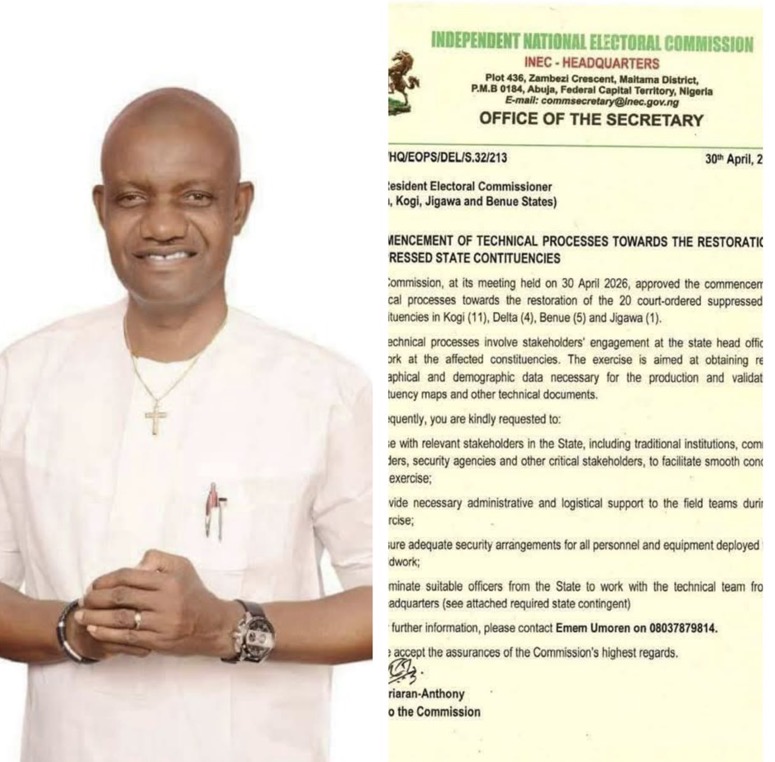
In a formal communication dated April 30, 2026, INEC announced the commencement of field and technical exercises across 20 court ordered constituencies spread across Kogi, Delta, Benue, and Jigawa States.
Delta State is among the key beneficiaries of the exercise, with four constituencies earmarked for restoration, including the proposed SapeleConstituency 2.
Reacting to the development, the immediate past Chairman of Sapele Local Government Area, Hon. Eugene Inoaghan, described the decision as a “thing of joy” and a long awaited victory for the people of the area. He said the development would significantly improve political representation and ensure more democratic dividends reach the grassroots.
According to him, the creation of an additional constituency in Sapele would end the long standing situation where only one House of Assembly member represents the entire local government area. He noted that with the new arrangement, two representatives would now serve the area, which he believes will enhance development, empowerment, and closer attention to community needs.
“This is a welcome development for us. It brings happiness because it means more dividends of democracy for our people. Instead of one representative, we will now have two. That alone will improve development and reduce pressure on leadership,” Inoaghan stated.
He further explained that the matter had been in court for several years, involving various stakeholders and legal processes before reaching its current stage of implementation. He expressed gratitude that the long standing agitation has finally yielded results.
Hon. Inoaghan also observed that the new arrangement is expected to ease political tension in the area, as competition for a single legislative seat had often created intense rivalry among aspirants.
With the introduction of two constituencies, he said political participation is likely to become more balanced and less contentious.
He added that under the proposed structure, Sapele will be divided into Sapele Constituency 1 and SapeleConstituency 2, likely along urban and rural lines, in line with electoral distribution standards.
However, he noted that final details are still subject to INEC’s technical review and stakeholder engagement process, which includes consultations with traditional rulers, community leaders, security agencies, and field verification exercises.
As preparations continue, residents of Sapele are expressing optimism that the development will usher in a new phase of representation, peace, and accelerated development across the local government area.