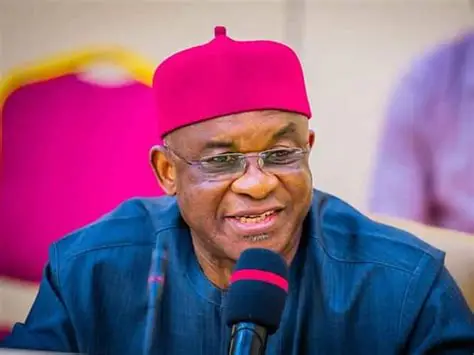
Nigeria’s electricity generation rose to 4,020.41 megawatts (MW) on Monday from 3,500MW, but the increase has yet to translate into adequate supply for consumers across the country. This comes as the promise last Thursday by the Minister of Power, Joseph Tegbe, to restore normalcy in power supply within 72 hours expired two days ago.
Data obtained from the Nigerian Independent System Operator (NISO) showed that 20 power plants were connected to the national grid as of 1.0pm yesterday, producing a combined 4,020.41MW. The output was below Sunday’s peak generation of 4,253.6MW but above the off-peak figure of 3,862.17MW.
Last Thursday, generation had dropped to 3,659MW from 3,996MW recorded the previous day, worsening supply conditions across several parts of the country.
Promising restoration within 72 hours, the Ministry of Power had ruled out a major or systemic national grid failure, explaining that preliminary assessments linked the disruptions to maintenance and operational challenges across parts of the power value chain, alongside declining generation.
An analysis of Monday’s generation profile showed that Afam VI contributed the highest output of 519MW, followed by Shiroro Hydro Power Plant with 445MW and Azura-Edo Independent Power Plant with 438MW. Egbin Power Plant, with an installed capacity of 1,320MW, contributed 108MW.
Meanwhile, load allocation to the 11 electricity distribution companies (DisCos) stood at a combined 3,195MW as of 5:07pm yesterday; Abuja DisCo received 581MW; Ikeja 467MW; Eko 458MW and Ibadan 359MW.
Others were Port Harcourt, 294MW; Benin, 243MW; Enugu, 233MW; Kano, 173MW; Kaduna, 167MW; Jos, 146MW; and Yola, 74MW.
In his update on the power situation, Minister of Power, Joseph Tegbe, said electricity had been restored to many communities affected by recent disruptions, particularly in Lagos, Ogun, Oyo, Kwara and the Federal Capital Territory.
He disclosed that the vandalised Benin-Egbin 330kV transmission line had been repaired and returned to service, helping to raise electricity supply to the Lagos Complex to more than 1,000MW. However, he acknowledged that some locations were still experiencing outages.