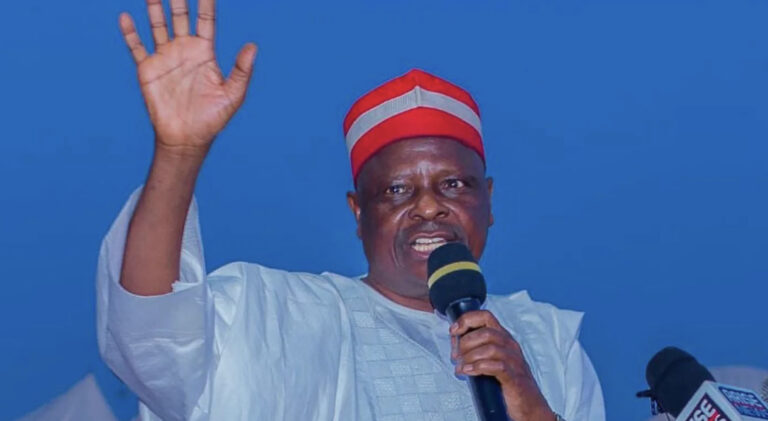
With the official declaration of Governor Ademola Nurudeen Jackson Adeleke, of the Accord Party as winner of Saturday’s governorship election in the state by the Independent National Electoral Commission (INEC), the long battle over who will steer the affairs of the state in the next four years has been decided.
It was a contest in which 15 political parties participated but which, on the day of the election, proved to be a three-horse race for the candidates of the Accord Party, Adeleke; the All Progressives Congress (APC) candidate, Asiwaju Munirudeen Bola Oyebamiji and the African Democratic Congress (ADC) candidate, Najeem Folasayo Salaam.
INEC Chief Returning Officer, Professor Joshua Ogunwole, while announcing the final results, said Adeleke polled a total of 511,067 votes, while his close rival, Bola Oyebamiji of the APC, polled 444,815 votes and Salaam of ADC got 17,180 votes.
Reacting to his victory, Adeleke appealed for restoration of peace and unity among Osun people to heal the wounds of pre-election violence, even as he promised to expand state development and widen the nets of good governance.
Addressing the media after his victory, the governor commended President Bola Ahmed Tinubu for his strong support for a free and fair election.
Adeleke said, “Mr President is a son of Osun State, and I hereby reaffirm my earlier endorsement of him for a second term in the 2027 presidential election. To all lovers of democracy, I thank you for supporting our struggle. From home and abroad, the support is overwhelming. My faith in democracy is deepened.”
Our correspondents report that the re-election struggle of Adeleke had not been a tea party. From the crisis in his former party, the People’s Democratic Party, which escalated to the point that he had to defect to the Accord Party, to the litigation around the eligibility of the Accord Party to field a candidate, Adeleke eventually scaled the hurdles and met INEC requirements to be on the ballot for the election.
Still, the pre-election stage was characterised by political violence in which many were killed and several others injured, with both the Accord and APC trading allegations and counter-allegations over the violent attacks during the campaign period.
Because of the tense situation in the state, there was massive deployment of security personnel to ensure the safety of lives, particularly the electorate, INEC officials and election observers.
On election day, however, our correspondent observed how residents defied threats of violence and came out in large numbers to cast their ballots, leading to a fairly large turnout of voters across the state, while electoral officials also arrived at polling units on time, with security operatives also promptly on the ground.
Daily Trust reports that though the BVAS machine worked perfectly in most parts of the state, there were instances where the machines caused delay and slowed down the process. However, eligible voters who came out were able to vote for candidates of their choice.
The results released indicate an increase in Adeleke’s political scope and an improvement over his performance in the 2022 governorship election.
In the 2022 election, Adeleke got 403,371 votes to defeat the then incumbent APC governor and now Minister of Marine and Blue Economy, Alhaji Isiaka Adegboyega Oyetola who got 375,027 votes (a margin of 28,344 votes) but in 2026, the margin has widened to 66,252 votes, more than doubling his winning margin in the previouselection.
Out of the 30 local government areas in the state, Adeleke won in 19, recording an improvement on that of 2022 in which he won in 17 out of the 30 LGAs in the state.
A further breakdown of the figures shows that while APC mobilised more votes than in 2022, Adeleke mobilised considerably more. Adeleke obtained about 51.9% of valid votes in the current polls, compared with about 50.1% in 2022. Oyebamiji, however, obtained about 45.2%, compared with Oyetola’s 46.6% in 2022.
Factors that aided Adeleke’s victory
Some of the factors that worked in favour of the Accord Party candidate according to analysts include workers’ welfare where the Governor has earned the support of the civil servants in the state because of prompt payment of salaries and pension; infrastructural development – though, people say he concentrated development in his home town of Ede – and the divisions within the APC, particularly because of the way Oyebamiji emerged as the candidate of the party.
Though none of the governorship aspirants left APC officially, many of them were still aggrieved and their supporters left the party and worked for Adeleke. For instance, the former Deputy Governor, Senator Iyiola Omisore, who was among the Governor aspirants disqualified, was aggrieved. Though Omisore did not leave the party, his followers moved to the Accord. This is reflected in the results from Omisore’s stronghold in Ife, which APC lost.
Prof. Olaleye Komolafe, a Professor of Political Science at Adekunle Ajasin University, Akungba-Akoko, believes Governor Ademola Adeleke’s victory in the Osun governorship election was largely determined long before election day due to internal crises within the APC.
According to him, the party’s decision to impose a candidate while sidelining influential aspirants such as former Governor Olagunsoye Oyinlola and Senator Iyiola Omisore created deep divisions within its ranks. He argued that the failure to genuinely reconcile aggrieved stakeholders after the primaries weakened the party’s structure and electoral prospects.
“Adeleke effectively won the election the moment the APC imposed its candidate and shut out other high-profile contenders. That decision triggered internal discontent, and despite efforts by President Bola Tinubu to bring party leaders together, the damage had already been done,” he said.
Komolafe noted that politics is driven by strategic interests and long-term ambitions. According to him, many of the sidelined aspirants understood that allowing the APC candidate to secure victory could jeopardize their own political aspirations ahead of future elections. While they remained within the party, many of their supporters quietly aligned with the Adeleke camp and played a significant role in his eventual victory.
Analysts say there’s also Davido’s campaign, which mobilized the youths and public sympathy against “Federal Might”.
It was learnt that President Tinubu had initially wanted Adeleke to defect to the APC but members of the party in Osun prevented him. As a result, Adeleke announced his endorsement of Tinubu’s re-election. It was believed that Adeleke’s decision to support Tinubu’s 2027 presidential bid weakened the chances of the APC candidate to get the President’s full support.
Why ADC came third
The African Democratic Congress (ADC) and its candidate were expected to pull a surprise in the governorship race due to the presence of the national secretary of the party and former governor of the state, Rauf Aregbesola, but the party came with just over 17, 000 votes in an election in which the winner polled over half a million votes.
Analysts say it was because the party at the national level did not indicate strong interest long enough, leaving the candidates of the Accord Party and APC to dominate the scene.
Osun ADC spokesperson, Seun Abosede, however believes the party has done well because they did not have the kind of resources others had.
“ADC did well. We expected the people to vote for us and they voted for us. We felt disappointed but at the same time, we were not aggrieved. We did not have money. Our politics is issue-based. We spoke to the people in a manner we ought and we expected them to understand.
“We did not engage in violence and politically related killings. But at the end of the day, undoubtedly because of the day, because of financial issues and vote buying, a lot of people went for money. At the end of the day, the people spoke in favour of the incumbent.
“Are we happy with that? I will not comment on that now. Are we happy that the party of the government at the federal level was not put in power? I reserve my comment. But the bottom line is that the people noted that the neo liberal policy of Tinubu’s administration is not welcomed in Osun State,” he stated.
The defection of former Secretary to Osun State Government, Alhaji Moshood Adeoti, who defected to Accord from the ADC, was also said to have contributed to Adeleke’s victory. It was said that the defection of Adeoti deflated Aregbesola/ADC camp and boosted Adeleke’s camp.
Meanwhile, the Osun State chapter of the APC has stated that the leadership of the party is currently studying the results of the governorship election in each of the 332 wards across the state with a view to exploring the constitutional window of opportunity in this regard.
“An election cannot be said to have been concluded without having explored all these constitutionally allowed legal opportunities to correct anomalies observed in the process of the election as enshrined in the Electoral Act 2026 as amended.
“We make bold to state categorically that as a progressive party which is founded on the unalloyed principle of the rule of law, fairness and justice, we shall not hesitate without further delay to explore the window allowed by the extant Electoral Act after due consultation with the team of our lawyers based on their professional advice.
“The new development is a beauty of democracy with reference to the Independent National Electoral Commission (INEC)’s declared governorship election results in the state, which would not propel us to deviate from embracing the culture of the rule of law,” the party said.
Losers without ballot
They may not have featured on the ballot paper, but the outcome of Saturday’s Osun governorship election has left several prominent political figures among its losers. Beyond the candidates who contested the poll, the election also became a test of influence, political strength and the ability of key power brokers to deliver their constituencies and supporters. From President Bola Tinubu and APC governors to former governors and party chieftains, several influential figures threw their weight behind the APC candidate, Bola Oyebamiji, in a bid to wrest power from Governor Ademola Adeleke.
But as the results emerged, some of these political heavyweights were left with little to show for their efforts. While some managed to deliver their polling units to the APC, others could not even secure their own units for the party they backed. Some of the prominent figures who, despite not being candidates in the election, emerged as losers from the outcome include President Tinubu, APC governors, Oyetola, among others.
Osun State is widely believed to be the President’s ancestral home, while Lagos remains the state he is most closely associated with. President Tinubu lost both states during the 2023 presidential election. An APC victory in the Saturday’s election in Osun State would have placed him in a good position ahead of next year’s election.
Few days into the election, Tinubu summoned no fewer than 76 leaders of the APC in Osun State to the Aso Rock Villa, Abuja, and reportedly demanded that they work together and give the APC victory.
Reports had it that the meeting, held late at night, followed a report by the National Security Adviser, Nuhu Ribadu. Ribadu’s report indicated that several APC leaders in the state were unhappy and had been sidelined in the party’s affairs, including the ongoing campaign.
Tinubu, according to reports, ordered the APC leaders to close ranks and ensure that the party’s candidate emerged victorious at the poll.
The President maintained a neutral stance openly throughout the electoral process and even demanded a free and credible election from INEC.
He had also congratulated Governor Adeleke on his reelection, describing it as a fitting assurance that democracy would continue to flourish under the APC administration.
The President said, “I called Governor Ademola Adeleke earlier today (Sunday) to congratulate him on his election victory in Osun State. His victory once again confirmed the confidence the people of Osun State have in him. “
When the EFCC froze the Osun government account, Tinubu ordered it to be unfrozen.
But many observers believed that, despite Tinubu’s public posture, he was desperate to have Osun State back in the APC’s fold, hence the deployment of the federal might in the election.
The ruling party deployed virtually all the APC governors to participate in the campaign and mobilise support to ensure victory for the party. During the campaign, some of the governors who stormed Osun did not mince words, calling out Adeleke and saying he would be sent packing on August 15. Edo State Governor, Monday Okpebholo, stoked controversy when he labelled Adeleke a dancing governor and accused him of neglecting governance.
“Before somebody signs a paper, he will dance. Are you not tired? For four years, this man has been dancing. Before he takes breakfast, before he drinks tea, he will dance,” Okpebholo told supporters.
Expectedly, Adeleke and his nephew, Davido, clapped back at the Edo governor.
Davido mocked the Edo governor by posting what looked to be Okpebholo’s WAEC results on his Instagram Stories. Although the singer did not include a commentary with the post, it was generally understood as a response to the governor’s remarks regarding Adeleke.
Imo Governor, Hope Uzodimma, who chairs the APC Campaign Council, and his Kwara State counterpart, AbdulRahman AbdulRazaq, were also caught in the attacks.
Davido took a swipe at the Kwara State governor over his comments at the APC mega rally in Osun.
AbdulRazaq, during the rally, stressed the need to have a governor who can go to Aso Rock and attract good things to Osun State.
The Kwara governor also said that Osun people need a governor who has access to President Bola Tinubu.
Responding in a post on his verified X handle, Davido wrote, “Your accessibility to the President or the Villa brought nothing but insecurity to Kwarans. These so-called leaders are watery.”
Minister of Marine and Blue Economy and former Governor Gboyega Oyetola had been defeated by Adeleke as a sitting governor in 2022, and many felt Oyebamiji’s pick by him was to take his pound of flesh from the incumbent four years after he left office.
Oyetola was ‘sure’ the APC would return to power and boastfully told Adeleke, “We will retrieve the power from you.”
Speaking in Yoruba during his address to APC members a few days before the election, Oyetola said Adeleke’s complaints suggested that the governor had realised he was losing control of the state.
He also dismissed Adeleke’s endorsement of President Tinubu, insisting that such an endorsement would not stop the APC from defeating the incumbent.
The National Secretary of the APC, Senator Ajibola Basiru, is another loser in Saturday’s election in his home state. He, however, delivered his polling unit for the APC candidate.
At Ward 7, Unit 3, Ibokun Road 2, Osogbo, where Basiru and his wife, Abibat, voted, Oyebamiji secured 177 votes to defeat Adeleke, who polled 60 votes.
Perhaps the last-minute open endorsement, and a shocking one, came from Oyinlola in favour of the APC’s Oyebamiji. It was believed that Oyinlola and Adeleke enjoyed a good relationship before the governor dumped the PDP for Accord in search of a political platform for his re-election bid.
Many analysts had expected that Adeleke, being a former PDP governor, would enjoy the support of Oyinlola and other PDP leaders going into Saturday’s poll, but they were wrong.
Oyinlola was joined by a former Secretary to the State Government, Fatai Akinbade, and former PDP National Vice Chairman, Southwest, Alhaji Tajudeen Oladipo, in declaring support for the APC man.
Oyinlola said the group adopted Oyebamiji’s candidature, having considered the decision necessary and out of conviction and a sincere desire for the progress of the state.
However, the Accord Party defeated the APC at Oyinlola’s polling unit in Okuku, Odo-Otin LGA of the state.
Accord secured 125 votes at Oyinlola’s polling unit, while the APC came second with 85 votes. The African Democratic Congress (ADC) polled five votes.
In the LGA’s result, Adeleke secured the highest number of votes in Odo-Otin Local Government. The Odo-Otin Local Government Collation Officer, Dr Ademola Aderibigbe, announced the aggregate results at the state collation centre. Adeleke polled 18,003 votes to defeat his closest challenger, Oyebamiji, who secured 15,435.
Unlike Oyinlola, Bisi Akande, also a former state governor and interim National Chairman of the APC, delivered his polling unit for his party. But the elder statesman and one of Tinubu’s right-hand men failed to hold Osun State down for Tinubu ahead of the next election.
Another loser in the election is the Senator representing Osun East, Francis Adenigba Fadahunsi. A retired customs officer, the APC senator stoked controversy when he allegedly issued death threats to the Accord Party members ahead of Saturday’s election.
Fadahunsi spoke in Yoruba while addressing supporters during a protest at the palace of the Owa Obokun of Ijesaland over what he described as incessant killings of the APC members in Ijesaland.
In the video circulating online, the senator, who was accompanied by other APC leaders, accused Accord Party members of killing people.
Fadahunsi had warned that there would be trouble if Accord Party members were seen in the area and was quoted as saying his supporters would “kill” them.
He later clarified that the statement was metaphorical, saying he meant that his supporters should defeat Accord at the polls through lawful and democratic means.
‘How Osun will shape 2027’
A political coalition movement, the G100, has said that the re-election of Governor Adeleke has provided Nigeria’s opposition parties with a template for defeating the ruling party in the 2027 elections.
The movement is working to unite opposition parties ahead of the 2027 general elections.
The group, in a statement signed by its spokesman, Salihu Moh. Lukman, on Sunday, said the outcome of the Osun governorship election demonstrated the power of opposition parties working together towards a common goal.
It congratulated Adeleke and the people of Osun State, as well as opposition leaders and candidates who set aside their individual ambitions to support the governor.
According to the group, the development showed that the major challenge facing Nigeria’s opposition was not lack of popular support but fragmentation.
“Osun has provided a template for 2027,” the group said, adding that the opposition could achieve more by consolidating its strengths behind a viable candidate.
It said the decision by some governorship candidates to step down for Adeleke was an indication that political leaders could put the broader democratic interest above personal and party ambitions.
The G100 urged opposition leaders to replicate the Osun experience at the national level if they genuinely wanted a change of direction in 2027.
The group said opposition leaders must demonstrate courage, restraint and willingness to compromise, arguing that the Osun experience had shown that cooperation could produce a stronger political force.
Former Vice President and presidential candidate of the African Democratic Congress (ADC) Atiku in a statement by his media office said the outcome of the election is a reflection of the democratic wishes of the people of Osun State.
He said the lesson from the election is that the voters in Osun State have set a good example of how we must come out in large numbers in the general elections next year.
“Another important lesson from the Osun election is that it is a clear manifestation of how the collective resolve of the electorate to stand firm to protect their ballot is the best antidote to rigging, vote buying and other electoral malpractice and irregularities.
“Nigerians have roundly rejected the APC. The election in Osun State is just a telling indication that the APC will be defeated in the general election in January 2027. Indeed, it is a forerunner of the 2027 General Elections,” Atiku said.
On his part, Ini Ememobong, National Publicity Secretary of the PDP faction, said the win by Governor Adeleke “is a clear message from Nigerians in Osun State about what the 2027 elections will be. The victory, which came at a high cost of strong will, vigilance and resistance by the people of Osun State against the entire rigging machinery of the ruling APC, who were desirous of winning the state at all costs.
“That the APC wanted Osun, by fair or foul means, was not in doubt to anyone, which accounts for the unceasing intimidation, assault and arrests of opposition politicians, the “kill them” directive by Senator Francis Fadahunsi and the performative invitation by the police, and his subsequent release to participate in the elections.”
PDP said, “The manifest partiality of security agencies, especially the police, and even the shameful intervention by the EFCC freezing the accounts of the state; and the intentional delay (more than two hours) in uploading the results of the 470 polling units by INEC, are acts that are not just condemnable but are actions capable of derailing democracy.”
Political scientist, Prof. Emmanuel Ojo, however, said the Osun experience demonstrated that elections could be conducted peacefully when security agencies were adequately deployed and the electoral commission was able to perform its duties without being overwhelmed.
“Osun is just a single state. And the prelude to the election was fearful, with political violence and the killing of as many as more than 30 human beings. That instilled a lot of fear in the electorate,” Ojo said.
He noted that the election was an off-cycle governorship poll, meaning security agencies were able to concentrate their resources on one state.
“But for a number of watchers and observers, we knew the election would be free, and would be conducted in a free atmosphere. Because it was an off-cycle election,” he said.
According to Ojo, the presence of the police, military and other security agencies helped prevent the security situation from becoming overwhelming, while INEC’s relatively prompt announcement of results was also a positive development.
The political scientist, however, cautioned against assuming that the relatively peaceful conduct of the Osun poll would automatically be replicated nationwide in 2027.
He said the scale of the 2027 general elections would pose a significantly greater challenge because security agencies will have to operate across the country rather than concentrate their resources in one state.
A Senior Advocate of Nigeria, Asiwaju Kunle Kalejaye, said Governor Adeleke’s victory is significant because it came despite what he described as strong political forces mobilised against him.
Kalejaye said the election demonstrated that public dissatisfaction with economic conditions does not automatically translate into the defeat of an incumbent.
According to him, party structure, grassroots mobilisation and voter sentiment can outweigh anger expressed on social media and in public gatherings. He said the Osun result should therefore serve as a warning to opposition parties ahead of 2027.
YIAGA, SERAP lament biometric failure, vote-buying
A prominent election observation team, Yiaga Africa, commended INEC for conducting a credible election in Osun State and charged the commission to sustain the commitment in the 2027 general elections.
Yiaga Africa also commended the people of Osun for their resilience and commitment by turning out to vote in the election, and therefore encouraged them to sustain this beyond the elections by holding political parties and candidates accountable for their campaign promises.
It called on INEC to conduct a comprehensive post-election technical audit of the BVAS devices to identify the causes of the failures and strengthen device testing, maintenance and rapid technical support to minimise disruptions to voter accreditation ahead of the 2027 general elections.
Yiaga said, “INEC should publish the causes of the biometric authentication failures recorded during accreditation, together with the remedial measures to be applied in 2027. INEC should ensure effective and comprehensive training of ad hoc officials, an effective oversight system for personnel deployed in the field and consistency in the application of the election day procedure.
“Security should review their deployment ahead of the 2027 general election by ensuring the joint deployment of security officials with the polling officials and election materials from the RACs to the Polling units on election day.”
The Socio-Economic Rights and Accountability Project (SERAP) has urged the Independent National Electoral Commission (INEC), Economic and Financial Crimes Commission (EFCC) and Independent Corrupt Practices and Other Related Offences Commission (ICPC) to investigate reported cases of vote-buying, financial inducement, illegal election financing, voter intimidation, violence, misuse of public resources and other electoral offences in connection with the 2026 Osun State governorship election.
In the petition dated 15 August 2026 and signed by SERAP Deputy Director Kolawole Oluwadare, the organisation said, “According to preliminary reports by the EU Support to Democratic Governance in Nigeria Election Observation Hub (EU-SDGN EOH), civil society observers recorded 323 electoral offences and irregularities across 726 polling units observed as of noon on election day.”
“These included 103 cases of vote trading, 28 cases of inducement of polling and security officials, 31 cases of voter obstruction, 38 cases of campaigning at polling units, 14 cases of voter impersonation, 12 cases of multiple voting, seven cases of election-official misconduct and 85 cases involving exposure of ballot papers.”
Daily Trust